Agave angustifoliaMainly Oaxaca & Puebla6-10 years to maturity
THE AGAVE
Espadín Facts
Botanical Species
Agave angustifolia
Mezcal Production Regions
Oaxaca · Puebla
Cultivation
Primarily Cultivated
Approximate Maturity
6–10 years
Piña Weight
31–133 kg
Mature Plant Height
1–2 m
Mature Plant Width
1.5–2 m
Prevalence in Mezcal
Very Common
Flavor Associations
Cooked agave, herbaceous, fruity
What Is Espadín Agave?
Espadín is a cultivated agave type used for mezcal and belongs to the species Agave angustifolia. It is especially common in Oaxaca, where it has become the backbone of mezcal production.
Growers can reproduce Espadín efficiently through offsets, and the plants usually reach harvest in around 6–10 years. Mature piñas can become very large, with recorded weights ranging from 31 to 133 kg.
Espadín is not a separate botanical species or an officially recognized botanical variety. The name refers to the cultivated type used by mezcal producers.
Other regional populations of Agave angustifolia are known by different names, such as Criollo in southern Estado de México, Criollo or Sacatoro in parts of Guerrero, and Bacanora-related agaves in Sonora.
Cultivated agave
How Espadín is propagated
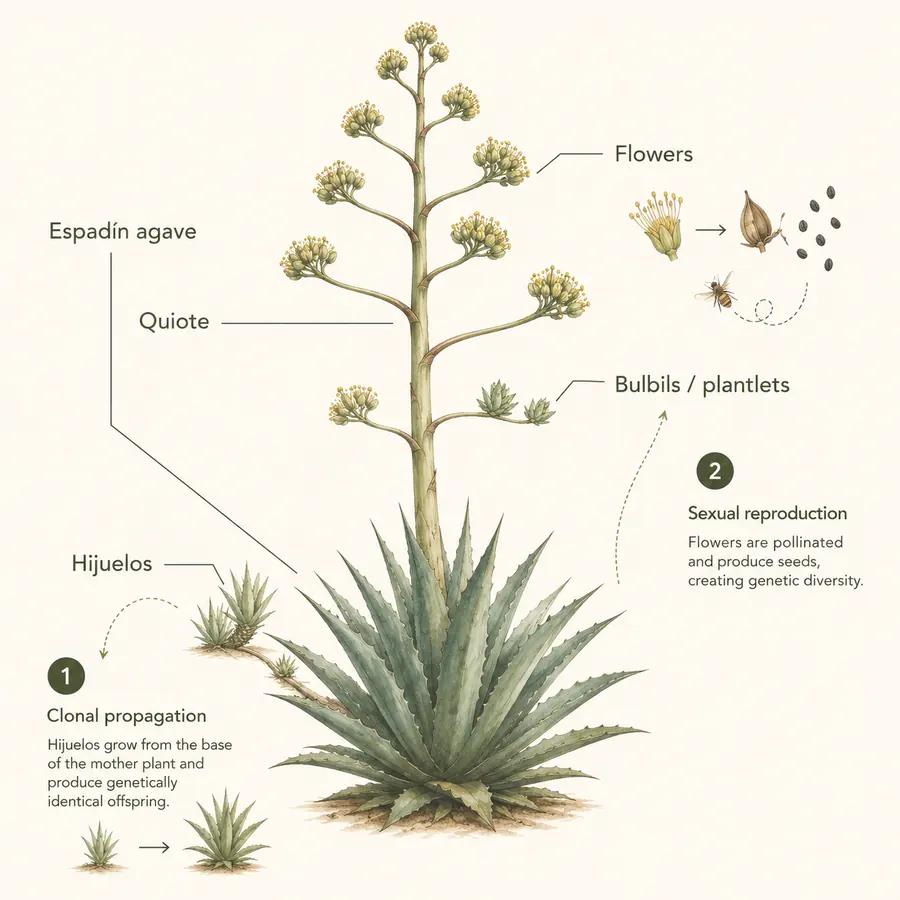
Espadín is well suited to cultivation. Growers can reproduce selected plants through hijuelos, small shoots that grow from the base of the mother plant.
These shoots can be removed and replanted. Because they come directly from the mother plant, they carry the same genetic material and allow farmers to keep propagating plants with known traits.
Espadín can also reproduce from seed when a plant flowers. In mezcal production, most plants are harvested before that stage.
Agave angustifolia
Espadín belongs to the species Agave angustifolia, which appears in several distinct local forms across Mexico. Some have developed different physical characteristics through local selection and growing conditions, while others are known mainly by different regional names.
Local Forms of Agave angustifolia
These plants have changed physically and chemically from Oaxaca Espadín through local selection or unique microclimates.
Name
Region
What sets it apart from Espadín?
Criollo
Estado de México
More compact and much sweeter. Often grows semi-wild on steep mountain slopes in Malinalco/Zumpahuacán. The slow growth concentrates the sugars, resulting in a smaller piña but a more fruity, herbal, and lactic (creamy) flavor profile.
Sacatoro
Guerrero
Shorter leaves and deeper sweetness. Adapted to Guerrero’s dry tropical forests and limestone soils. Produces a darker character (burnt sugar, ripe figs) combined with a clear chalky minerality.
Lineño
Jalisco
Much straighter leaves and a faster cycle. A traditional landrace that matures in only 6-7 years. Used mainly for Raicilla and produces a considerably more vegetal, peppery and green flavor profile than Oaxaca Espadín.
Castilla / Ki’mai
Durango
A gigantic wild form. The rosettes become monumental, reaching up to 4 meters across. The plant is extremely fiber-rich, producing a completely different, more pine-like, earthy, and resinous character in the spirit.
Regional Names of Agave angustifolia
These are genetically identical to commonly cultivated Espadín, but the name is determined entirely by geography, local traditions, or separate denominations of origin (DO).
Name
Region
Context
Espadilla
Puebla
Puebla’s pride. Botanically 100% the same plant as Espadín. The difference in the bottle comes entirely from Puebla’s terroir (limestone-rich soil, higher elevation) and local traditions of roasting the agave with different woods such as oak or mesquite.
Bacanora / Pacífica / Yaquiana
Sonora
Northern Mexico’s adaptation. Three names for the same A. angustifolia used to make the spirit Bacanora. Sonora’s climate, with winter frost and extreme summer heat, forces the plant to develop differently, producing a considerably drier, smokier, and earthier character.
Doba-yej
Oaxaca
The Zapotec heritage. The ancient original name for Espadín. When producers in Oaxaca’s Central Valleys put this on the label, it marks cultural pride, and the spirit is often distilled in a traditional copper still.
Plant Profile
How to recognize Espadín
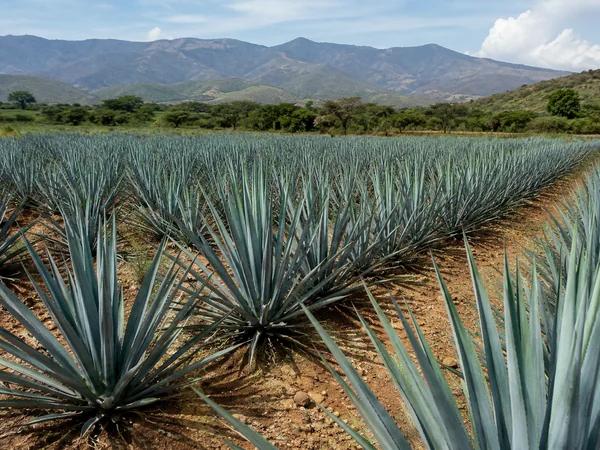
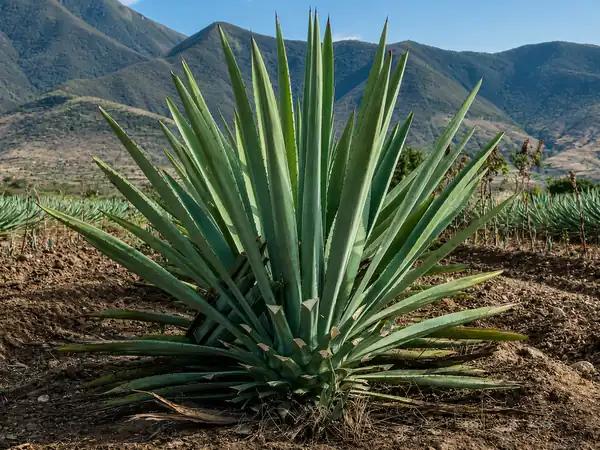
Espadín forms a large, open rosette, typically around 1.5-2 meters high and 1.5-2 meters wide. The leaves are rigid and narrow, with marginal teeth and a sharp terminal spine.
Compared with Blue Weber agave, Agave tequilana, Espadín has a more open profile with narrower green to blue-green leaves. Blue Weber typically grows more compactly, with broader, more rigidly upright leaves and a stronger silver-blue color.
Signs of maturity
As the plant approaches physiological maturity, the center of the rosette begins to change.
Full-sized leaves stop developing and the inner core, or cogollo, becomes shorter and more tightly clustered.
The next stage is the emergence of the quiote, the flowering stalk that grows from the center of the rosette. This marks the beginning of the plant’s single reproductive cycle.
For mezcal production, growers may cut the emerging stalk in a practice known as capado. This keeps more of the plant’s stored carbohydrates in the piña before harvest.
Growth, Cultivation and Harvest
Espadín is widely cultivated because of how it propagates, develops and responds to harvest management. Each stage directly impacts field management and the chemical composition of the raw material delivered to the palenque.
01
Propagation
Espadín is propagated mainly through hijuelos, rhizome shoots that grow from the mother plant. Aerial bulbils can also be used to establish new plants.
Both methods are asexual, producing plants with essentially the same genetic material as the parent. Reproduction from seed creates greater genetic variation but is less common in commercial cultivation.
02
Growing Cycle
Espadín uses CAM photosynthesis, opening its stomata mainly at night to reduce water loss in dry conditions.
Instead of storing starch as its main reserve carbohydrate, the plant accumulates fructans in its stem. In Agave angustifolia, these include highly branched fructans known as agavins, which later become important during cooking and fermentation.
03
Harvest
Harvesting the mature plant is known as la jima. A jimador removes the spine-tipped pencas with a coa, exposing the sugar-rich stem known as the piña.
The cut matters. Green leaf bases are removed closely because leaving too much plant material attached can contribute unwanted bitter compounds during cooking.
Espadín is readily propagated through rhizome shoots and bulbils, making it practical to establish cultivated fields. Harvested piñas in Oaxaca have been documented at 31-133 kg, with an average weight of 80.87 kg.
Agave angustifolia also tolerates conditions that restrict many conventional crops, including water deficit, high temperatures, moderately saline soils, and low soil fertility. CAM photosynthesis allows the plant to take in carbon dioxide mainly at night, reducing water loss during the hotter daytime hours.
From Agave to Mezcal: Processing Traits
Espadín does not enter production as a neutral raw material. Its carbohydrate structure, fiber content, and chemical composition determine what happens during cooking, milling, and fermentation.
Heat Unlocks the Sugars
Raw Espadín stores much of its carbohydrate reserve as fructans, including branched agavins concentrated in the stem.
Yeast cannot efficiently ferment these complex molecules in their original form.
Heat hydrolyzes the fructans into simpler sugars, predominantly fructose with smaller amounts of glucose.
Because fructose is sweeter than glucose, this breakdown contributes to the intensely sweet, honey-like character of cooked agave. These sugars become available for fermentation once the cooked agave is milled.
Breaking Down the Piña
The piña contains both fibrous vascular tissue and softer pith.
Agave angustifolia used for mezcal in Oaxaca has been measured at roughly 30% fiber and 70% pith.
Milling breaks that structure apart and exposes the sugar-rich material held within the cooked piña.
Other mezcal agaves can have substantially different fiber-to-pith ratios, which changes how they behave during crushing.
Where Fermentation Builds Flavor
Cooked Agave angustifolia has been measured at around pH 4.5 and 27° Brix.
Brix is a scale used to measure sugar concentration, so that reading indicates a high concentration of fermentable sugars.
Fructose makes up a major part of that sugar supply.
The final fermentation profile depends on both the raw agave and the microorganisms present.
Agave angustifolia supports strong ethanol production, while the volatile compounds formed during fermentation vary with both agave species and yeast strain.
What Espadín Tastes Like
Espadín is commonly associated with green maguey, herbaceous notes, acidity, bitterness and astringency. In ancestral examples from Santa Catarina Minas, green maguey and bitterness stood out, while Santa María Ixcatlán showed more sourness and woody aroma.
Floral, earthy and spicy notes also occur within Agave angustifolia. Guerrero expressions have ranged from pronounced floral aroma and astringency to earthier, spicier profiles.
Compared with Other Agaves
Where Espadín leans greener, sharper and more astringent, Tobalá can move toward sweeter ripe and cooked-agave flavors.
Cupreata examples range from herbal and fruity to earthy, citric and woody, while Americana can push much further toward mentholated and spicy aromas.
Those differences start before fermentation or distillation. Espadín and Tobalá do not have the same sugar and acid chemistry.
Cooked Agave angustifolia contains more fructose, while finished Espadín mezcal has also shown higher acetic acid, helping explain its sharper sour edge.
More sugar in the piña therefore does not automatically mean a sweeter mezcal in the glass.
What Production Adds
The smoky character commonly associated with Espadín is a process-derived trait rather than a botanical one. During roasting, heat breaks down lignin and forms volatile phenols that contribute smoky and charred aromas, while Maillard reactions can add roasted, nutty, and spicy notes.
Fermentation adds another layer. Yeasts produce esters such as ethyl acetate, which contribute fruity and floral aromas, alongside higher alcohols that remain in the finished mezcal.
Copper changes the profile by removing sulfur compounds during distillation. Without that copper contact, compounds associated with meaty and sulfury aromas can remain at higher concentrations.
Clay can leave a very different fingerprint. Earthenware-distilled mezcals have been associated with stronger earthy and muddy aromas.
Those notes sit outside Espadín’s greener, sharper and more astringent baseline and are instead linked to the distillation system.
Genetic Diversity
Why Flowering Matters
Commercial Espadín is propagated heavily through hijuelos, producing closely related plants across cultivated fields. In Oaxaca, cultivated Espadín has substantially lower genetic diversity than wild Agave angustifolia, with unusually high genetic similarity between plants.
Flowering changes that. Pollination creates genetically unique seeds, while harvesting every mature plant before flowering removes that sexual reproduction from the field.
Clonal propagation: Hijuelos preserve selected traits but generate little new genetic variation.
Sexual reproduction: Flowers allow pollination, recombination and genetically different seeds.
Bat Friendly standard: Participating producers leave at least 5% of mature agaves to flower, supporting nectar-feeding bats while restoring pollination and seed production.
Sustainability and Environmental Issues
Espadín’s commercial success has increased pressure on land use in Oaxaca. The main issue is not the agave itself, but how intensively it is cultivated.
Land Use
In the Río Alto Tehuantepec and Río Tequisistlán sub-basins, agave plantations expanded from 4,889 hectares in 1995 to 21,679 hectares in 2022.
Large monocultures and reduced crop rotation simplify fields that were traditionally managed with more varied farming practices.
Intensive systems can also rely more heavily on fertilizers, herbicides and insecticides than traditional agave cultivation.
More Diverse Systems
Allowing some plants to flower preserves sexual reproduction and supports nectar-feeding pollinators.
Intercropping, crop rotation and greater genetic diversity can reduce some of the ecological pressure created by intensive single-crop production.
Pests and Diseases
Espadín is affected by several pests and pathogens that attack the plant from the roots upward. Two of the most important are the agave snout weevil and Fusarium fungi.
Agave Snout Weevil
Picudo del agave
Scyphophorus acupunctatus attacks the base and inner tissues of the plant.
The larvae tunnel through the core, weakening the plant and creating entry points for bacterial rot and other secondary infections.
Fusarium
Marchitez del agave
Fusarium species infect the roots and the stem's vascular tissue.
The infection disrupts water transport, causing leaf discoloration, wilting, and tissue decay that can eventually kill the plant.
History and Traditional Uses
Long before Espadín became Oaxaca’s dominant mezcal agave, Agave angustifolia served several practical uses. In Oaxaca, its leaves were processed into ixtle for ropes, bags and agricultural equipment, while the flower buds were eaten and young inflorescences used as livestock forage.
By 1980, Espadín cultivation in Oaxaca covered about 7,164 hectares across 17 districts and 167 municipalities. Large-scale cultivation was therefore already established decades before mezcal’s recent international expansion.
Modern cultivated Espadín is a highly related clonal lineage selected and repeatedly propagated by farmers. Its precise ancestry has not yet been identified, but it is genetically distinct from the wild Agave angustifolia populations sampled in Oaxaca and Puebla.