De la Tierra a la Vida
El Herbolario
Mezcal El Herbolario is an award-winning artisanal mezcal from Oaxaca's Sierra Sur. It's made in Santa María Quiegolani by maestro mezcalero Juan Díaz, and it takes its name and its third-eye label from Mexican herbalism.
Award-WinningVegan-CertifiedHerbalist Roots
THE BRAND
About El Herbolario
Region
Towns
San Dionisio Ocotepec · Santa María Quiegolani
Show all 3 townsShow fewer towns
Santiago Matatlán
Mezcalero
Website
EXPLORE THE COLLECTION
Bottle Lineup
Awards and recognition
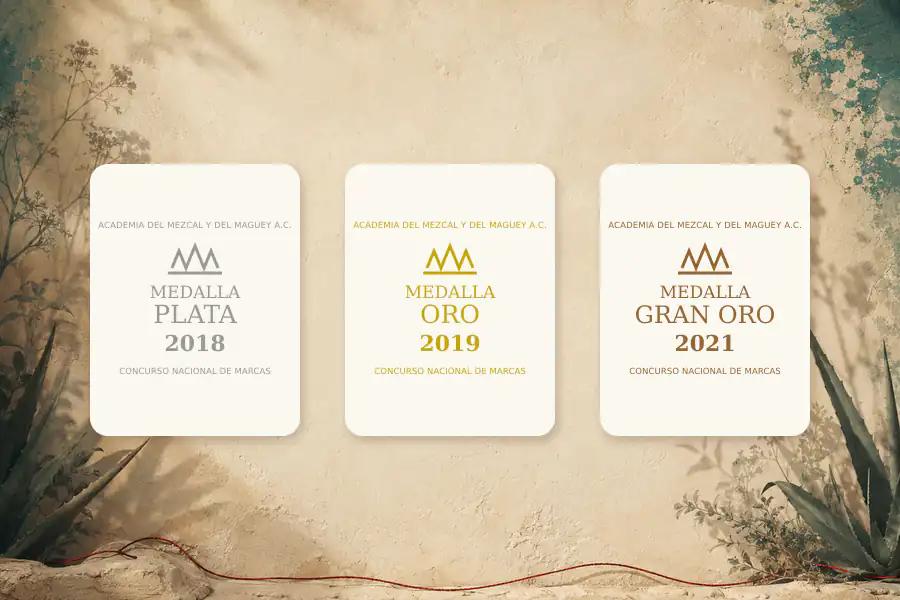
Medals across the El Herbolario range
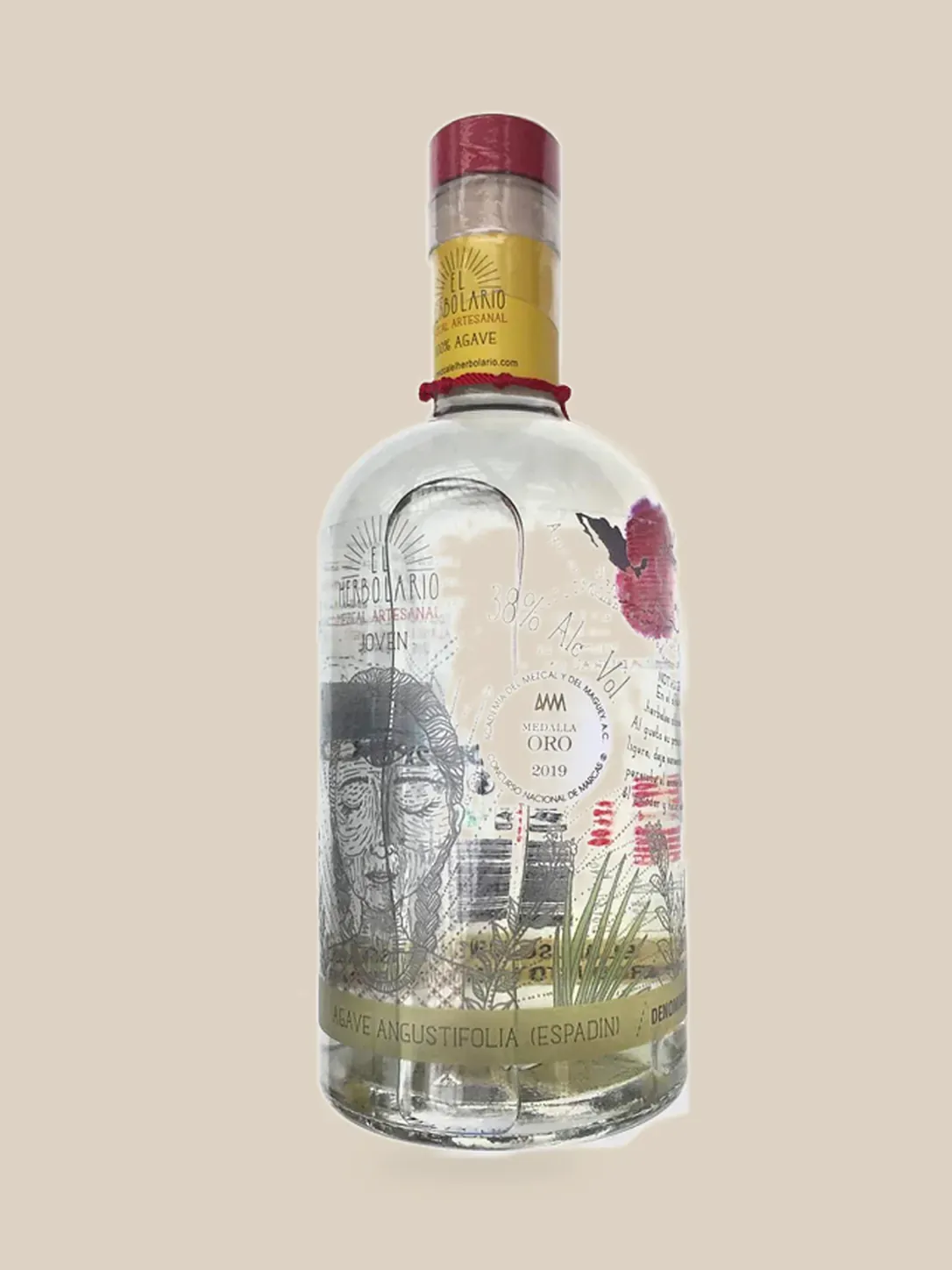
El Herbolario received its first confirmed silver medal in 2018, followed by a gold medal for its Espadín in 2019.
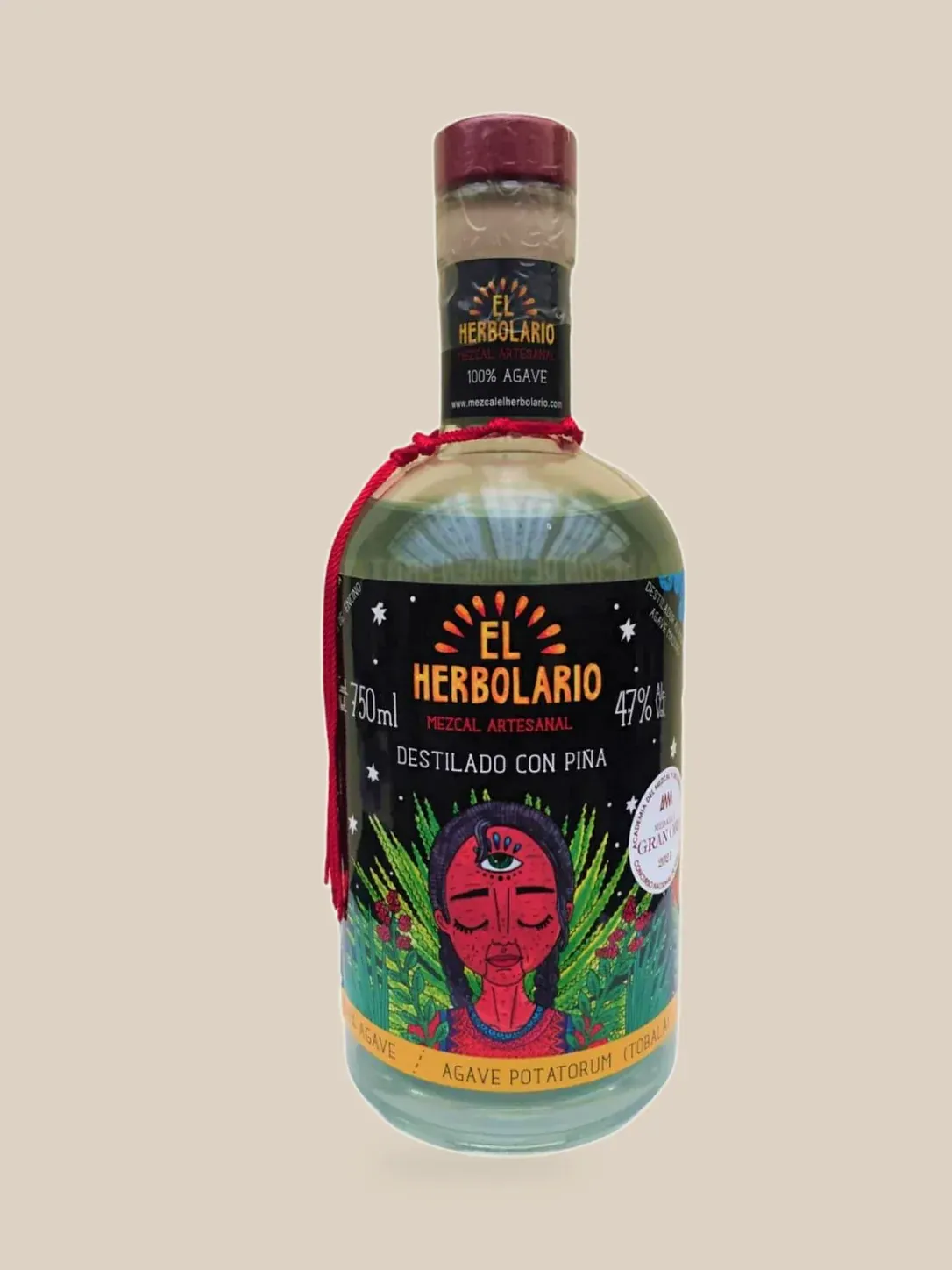
In 2021, the brand secured two more medals from the Academia del Mezcal y del Maguey: a gold for the standard Tobalá and a Gran Oro for the Tobalá Distilled with Pineapple.
The pineapple expression later received Double Gold at the 2022 Proof Awards in Las Vegas. El Herbolario added another silver medal at the Catad’Or World Spirits Awards in 2024.
The story behind El Herbolario Mezcal
El Herbolario simply means “the herbalist” in Spanish. The name refers to herbolaria, the Mexican tradition of using plants as medicine. That influence runs through the labels and the brand’s identity.
The palenque is in Santa María Quiegolani, more than 2,000 meters above sea level in Oaxaca’s Sierra Sur. Maestro mezcalero Juan Díaz leads production there. Five other people work with him, and three families depend on it. Small operation, not a factory.
Volcanic-stone oven, stone tahona, oak fermentation tanks, then two passes through a copper still. All artisanal, all by hand.
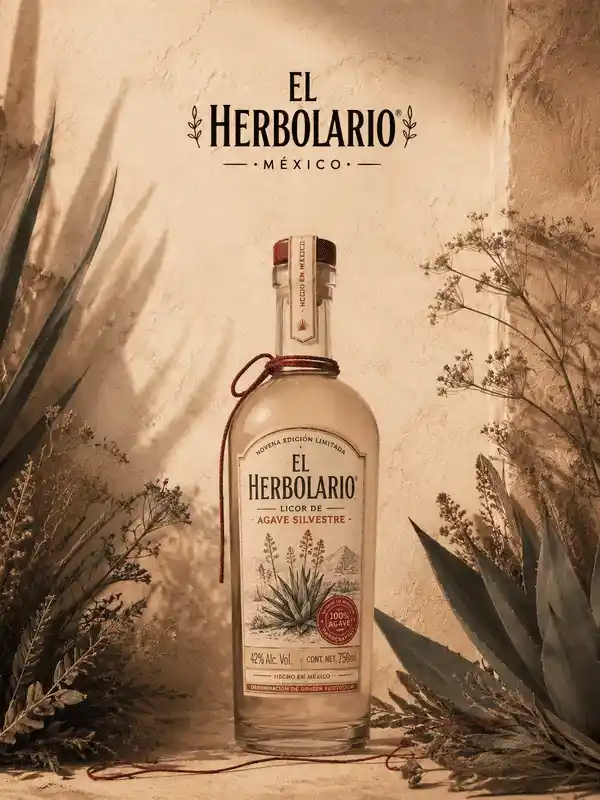
Two agaves carry the range. Espadín forms the starting point, while Tobalá appears both on its own and redistilled with pineapple. El Herbolario is certified vegan, and all three expressions have received medals from the Academia del Mezcal y Maguey.
De la Tierra a la Vida is what they put on it. From the earth to life.
El Herbolario’s identity
The third eye and the red thread
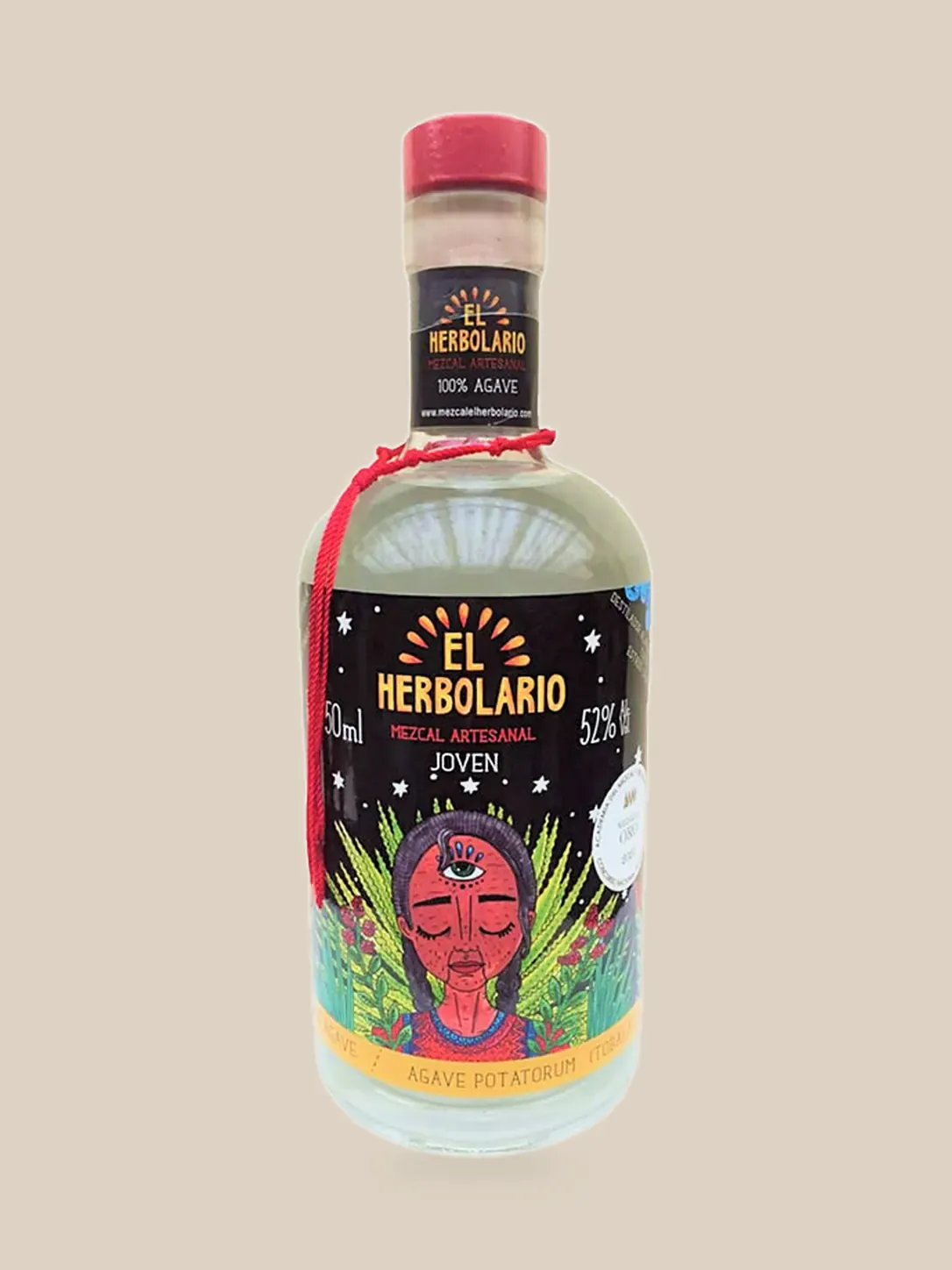
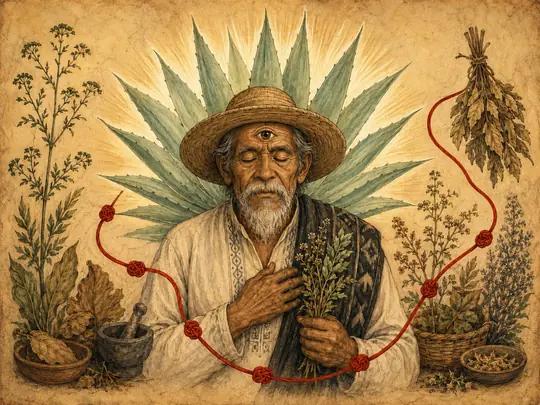
El Herbolario’s labels were created by Mexican artist Erika Santiago. Their elderly figures represent knowledge carried through generations, while the closed eyes suggest calm, reflection, and a connection with the world beyond the visible.
Each figure has a third eye and stands beneath the glow of an agave. Together, these details draw on the mystical and spiritual side of Mexican herbal tradition, turning every bottle into its own character.
A red thread bracelet comes with the mezcal. Traditionally worn around the left wrist with seven knots, it is associated with protection against envy and mal de ojo, or the evil eye.
How El Herbolario mezcal is made
At its palenque in Santa María Quiegolani, El Herbolario follows an artisanal process shaped by the Sierra Sur. Locally grown agave is cooked in stone, crushed by tahona, fermented in oak, and distilled twice in copper.
01 · Agave
Grown high in the Sierra Sur
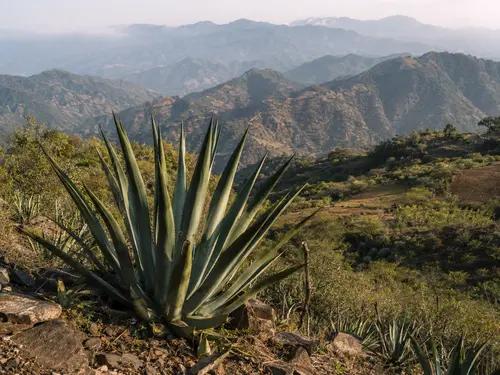
The main palenque sits more than 2,000 meters above sea level in Santa María Quiegolani. Its agave comes from small local plantings tended by several growers in the surrounding area.
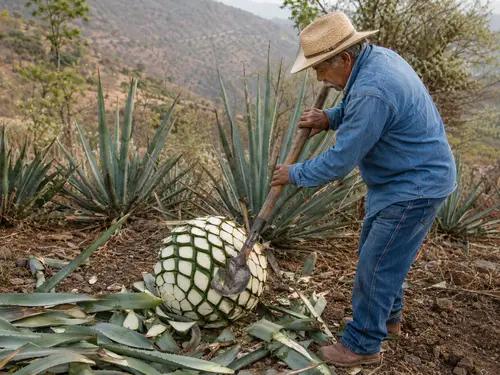
02 · Harvest
Harvested by hand
Once the agave reaches maturity, its leaves are cut away to expose the piña. The harvested hearts are then transported to the palenque for cooking.
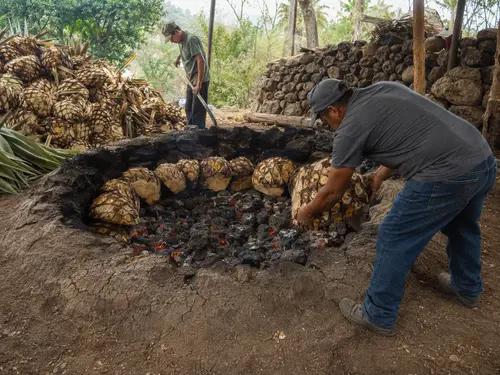
03 · Cooking
Cooked in a stone oven
The agave piñas are slowly cooked in a traditional conical oven lined with volcanic stone, softening the fibers and developing their roasted sweetness.
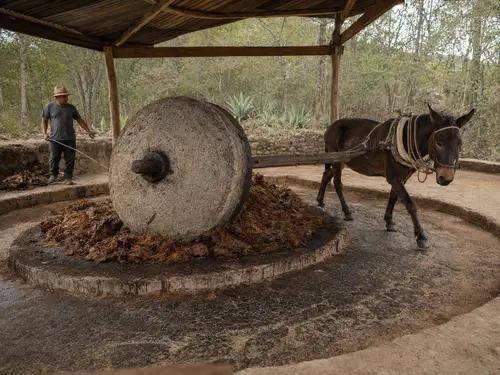
04 · Crushing
Crushed by stone tahona
After cooking, the softened agave is broken down by a heavy stone tahona pulled around the mill by a horse or mule.
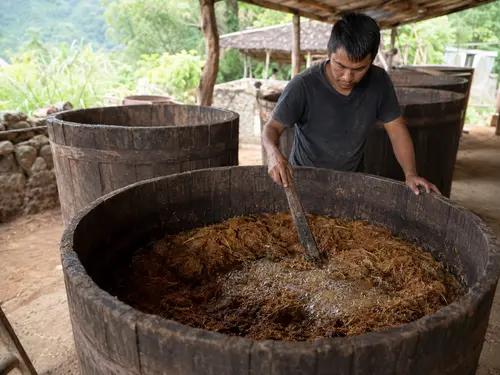
05 · Fermentation
Fermented in oak vats
The crushed agave ferments in oak vats. Local yeasts and microorganisms drive the process and connect each batch to its highland environment.
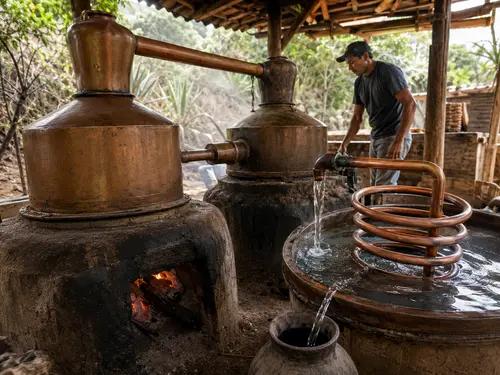
06 · Distillation
Twice distilled in copper
The fermented agave is distilled twice in copper stills. Water from the river in Santa María Quiegolani is used to cool the copper coil during distillation.
Espadín and Tobalá
El Herbolario works with two agaves, Espadín and Tobalá, and the flavor of each comes down to the plant and the way it's made.
Espadín is the everyday bottle. It's soft and light, more herbal than smoky. You get lemongrass and lemon verbena up top, some orange and grapefruit peel, and cooked agave underneath. The flavor is easygoing with a fresh finish. The volcanic-stone oven and copper still are what keep it that clean.
Tobalá is the step up. It's a small wild agave that needs years longer in the ground than Espadín, and that slow growth shows. Softer, more floral, with fruit and a clean mineral streak.
Then there's the Tobalá redistilled with pineapple. That second pass with fruit lays a ripe, tropical sweetness over the delicate Tobalá base, without turning it into a sweet drink.
Sustainability
The brand is certified vegan by V-Label, and environmental care is one of the three pillars the brand is built on. It follows the three R's: reduce, reuse, recycle, across how it works.
The fair-trade side is concrete. The palenque in Santa María Quiegolani supports six people directly and three families, and the brand says it's working on sustainable maguey planting to keep production going for the long run.