
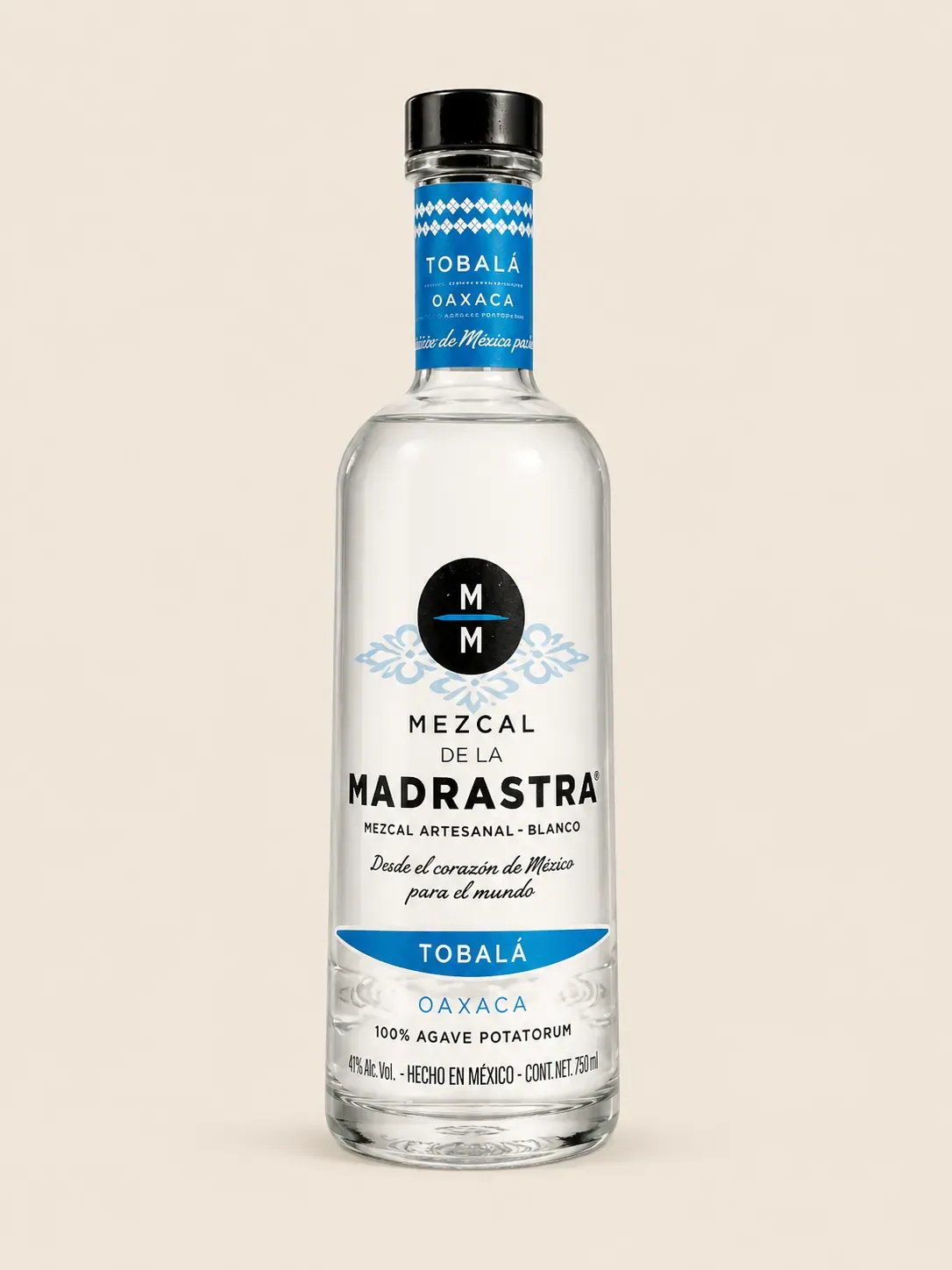
WILD TOBALÁ FROM OAXACA
Mezcal de la Madrastra
Mezcal de la Madrastra began with Constanza, whose four stepchildren turned a loaded family title into one used with affection. She later partnered with Oaxacan mezcólogo Eberth Vera to create an artisanal mezcal from wild Tobalá.
Wild TobaláAround 10 Years to MatureConstanza’s Story
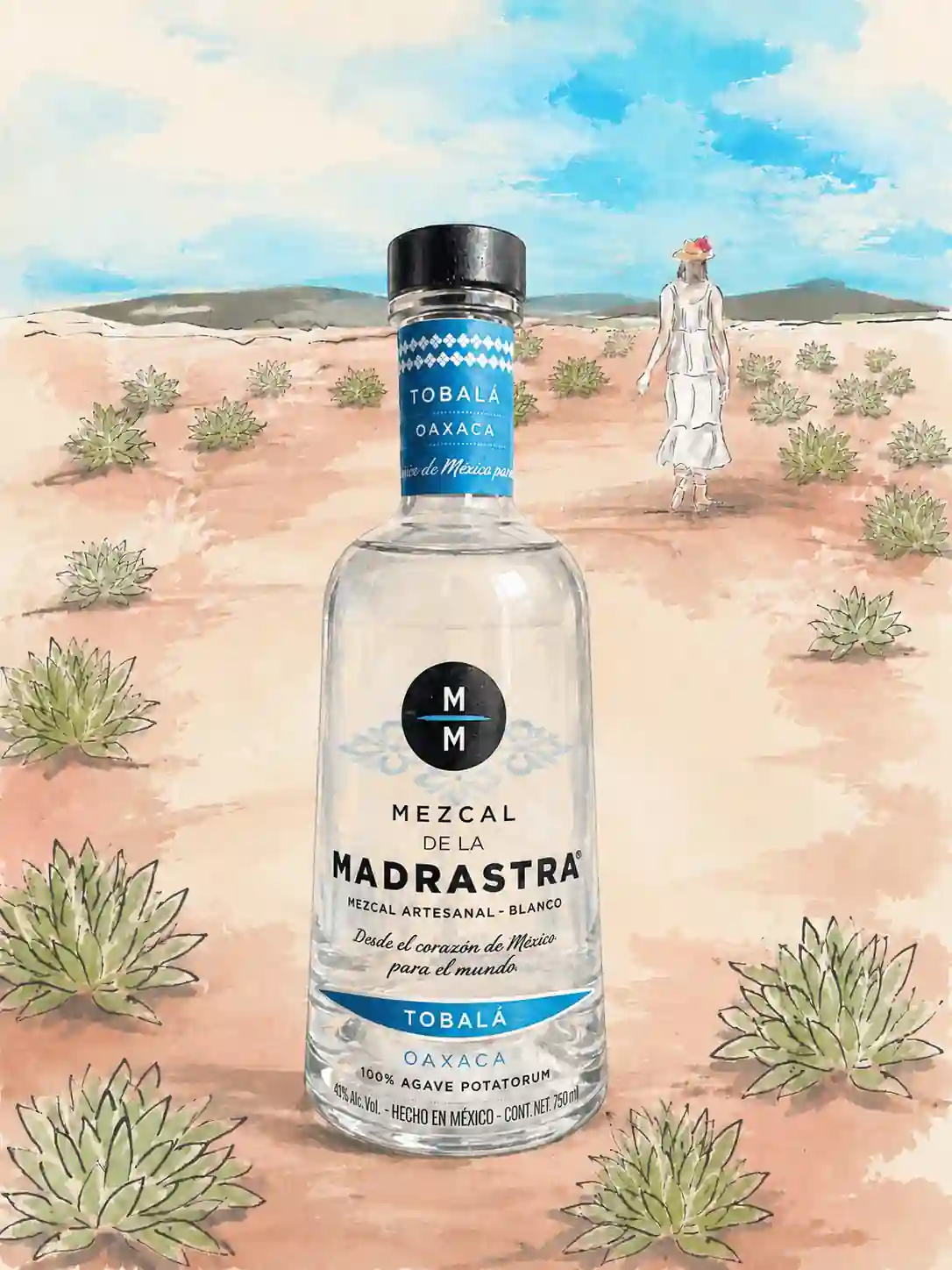
THE BRAND
About Mezcal de la Madrastra
EXPLORE THE COLLECTION
Bottle Lineup
The story behind Mezcal de la Madrastra
Mezcal de la Madrastra's story begins with Constanza, one of the brand’s founders. When she married Juan, she became stepmother to his four children.
They called her “mi madrastra,” Spanish for “my stepmother.” It was a term of affection, far removed from the cruel stepmothers found in traditional stories.
During a trip to Oaxaca, Constanza discovered mezcal. She was fascinated by its flavor and origin, but especially by the work behind traditional production.
She partnered with Eberth Vera, a mezcólogo and palenque owner in Oaxaca. Together, they created an artisanal mezcal made from wild Tobalá.
Madrastra also describes her bond with the agaves. She is not their mother, but she cares for them through maturation until their hearts are ready for mezcal.
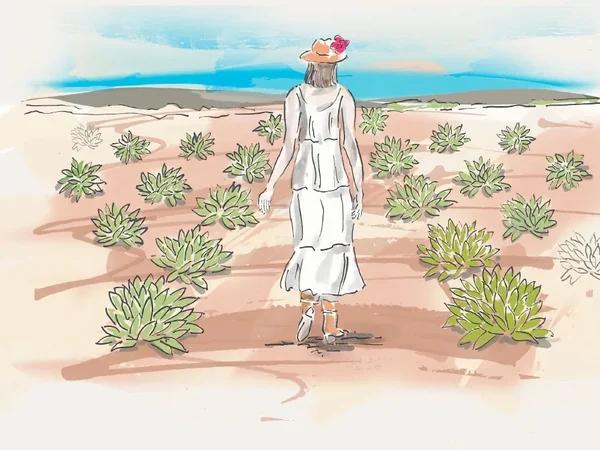
Mexica mythology
Mayahuel and the heart of the agave
Mezcal de la Madrastra places Mayahuel at the center of its identity. In Mexica tradition, she is the deity of maguey, the plant from which pulque and mezcal begin.
Mayahuel is also associated with the Centzon Totochtin, the “400 rabbits,” a multitude of deities connected with pulque and intoxication.
The brand carries that story into its wild Tobalá. After around ten years of growth, the leaves are removed and the plant gives up the piña at its center.
Mezcal de la Madrastra calls that piña the agave’s heart. Mayahuel represents the care given to the plant before that heart is cooked, fermented, and distilled.
How Mezcal de la Madrastra is made
Wild Tobalá takes around ten years to mature. At the palenque, the piñas are cooked underground, crushed by tahona, fermented with their fibers, and distilled twice in copper.
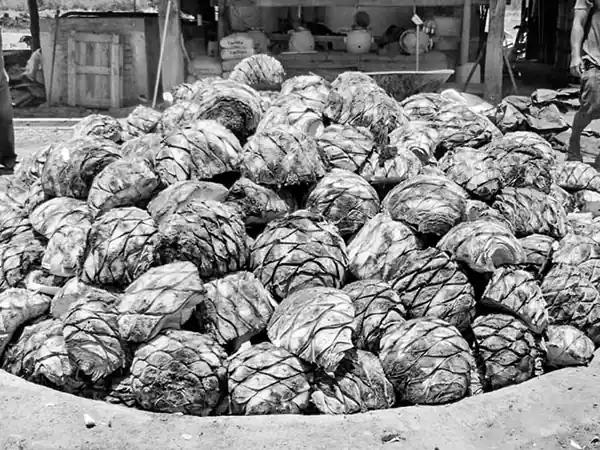
01 · Harvest
Wild Tobalá at maturity
Wild Tobalá spends around ten years growing before harvest. Its leaves are removed to expose the piña, the sugar-rich heart used to make the mezcal.
02 · Oven preparation
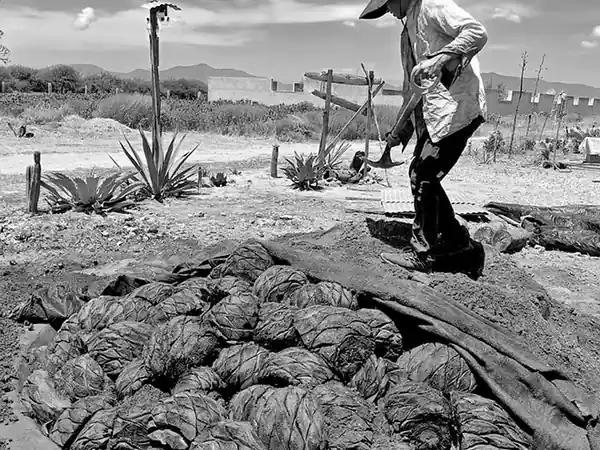
Preparing the pit
The harvested piñas are brought to the palenque, where the stone-lined pit oven is prepared. The agave is arranged inside and covered for cooking.
03 · Cooking
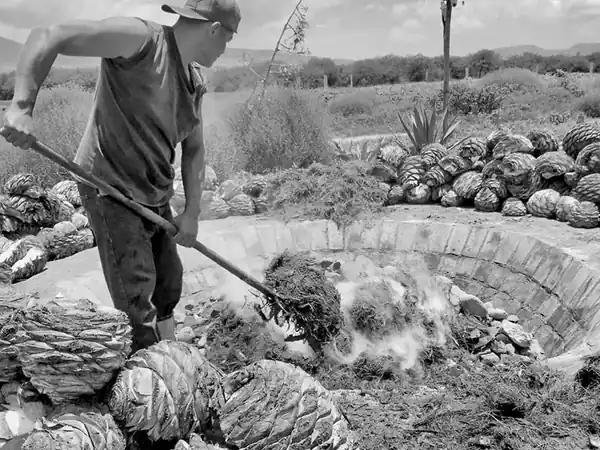
Caramelized, not burned
The piñas cook until their fibers soften and their sugars caramelize. Laura Noguera’s tasting notes describe light smoke rather than the harsher character of burned agave.
04 · Milling
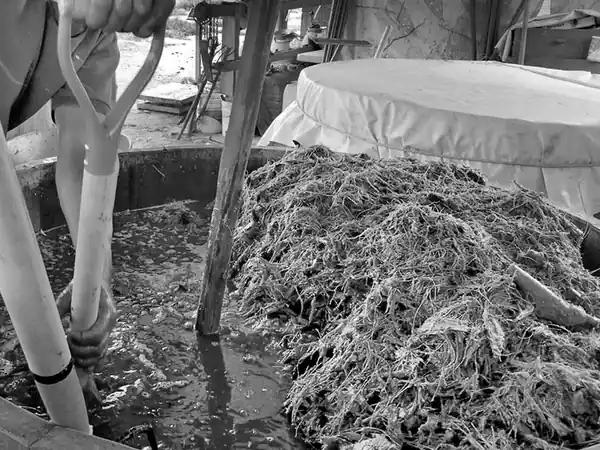
Crushed by stone tahona
After cooking, the softened piñas are crushed under a stone tahona. This opens the fibers and releases the sweet agave juices needed for fermentation.
05 · Fermentation
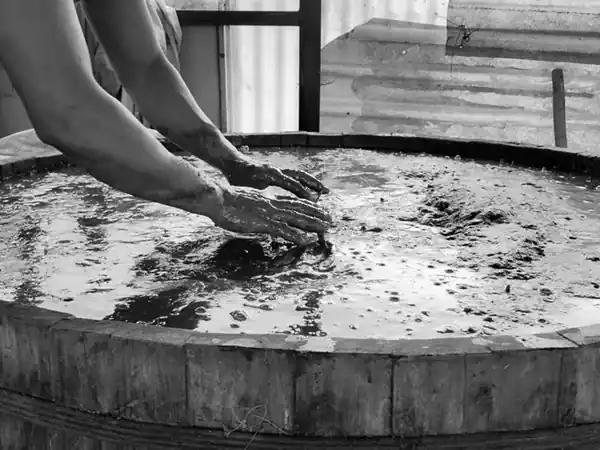
Fermented with the fibers
The crushed agave, its juices, and the fibrous bagazo ferment together in open wooden vats. Workers mix the contents by hand with a long wooden paddle.
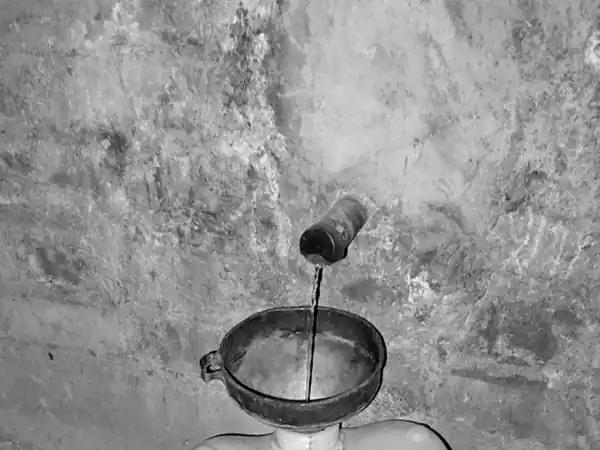
06 · Distillation
Twice distilled in copper
The fermented agave is distilled twice in a copper alembic. The finished blanco mezcal is bottled at 41% alcohol by volume.

Mezcal curator
The woman behind the tasting notes
Laura Noguera, known as Lala, is the curator of Mezcal de la Madrastra. She specializes in Mexican distillates made from agave and sugarcane.
Her work includes advising restaurants and hotels, writing about food, wine, and spirits, and judging national and international spirits competitions.
In this Tobalá, she found light smoke, walnuts, prunes, white flowers, herbs, and subtle red fruit on the nose.
Her palate notes include minerality, leather, mature cheese, ripe guava, subtle anise, and cooked agave, followed by a warm, medium-long finish.
Wild Tobalá, ten years in the making
Before it becomes Madrastra, the wild agave Tobalá spends around a decade maturing. Botanically, it belongs to Agave potatorum, a species found naturally in central Oaxaca.
Tobalá reproduces mainly from seed. For wild populations to renew themselves, some mature plants must remain in the landscape long enough to flower.
Once selected for harvest, the pointed leaves are removed and the piña is taken to the palenque. The plant’s decade of growth then becomes the raw material for a single batch.