
ANCESTRAL MEZCAL FROM OAXACA
Native American
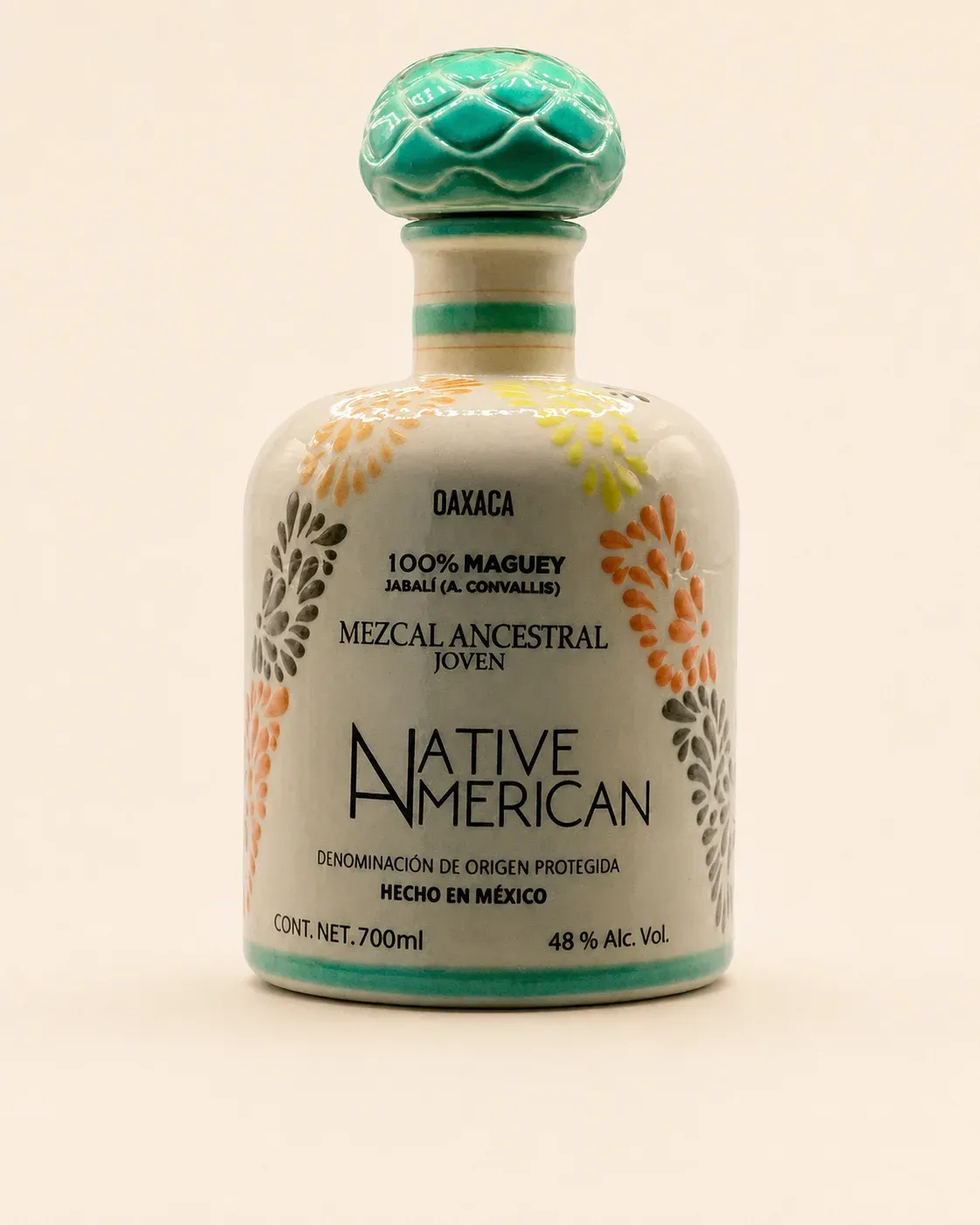
Native American is an ancestral mezcal from San Juan Guelavia in Oaxaca’s Tlacolula district. Its first Jabalí release is made through a traditional process that includes a conical pit oven, wooden-mallet milling, pinewood fermentation vats, and two distillations in clay pots.
Ancestral MezcalJabalíSan Juan Guelavia
THE BRAND
About Native American
EXPLORE THE COLLECTION
Bottle Lineup
The story behind Native American
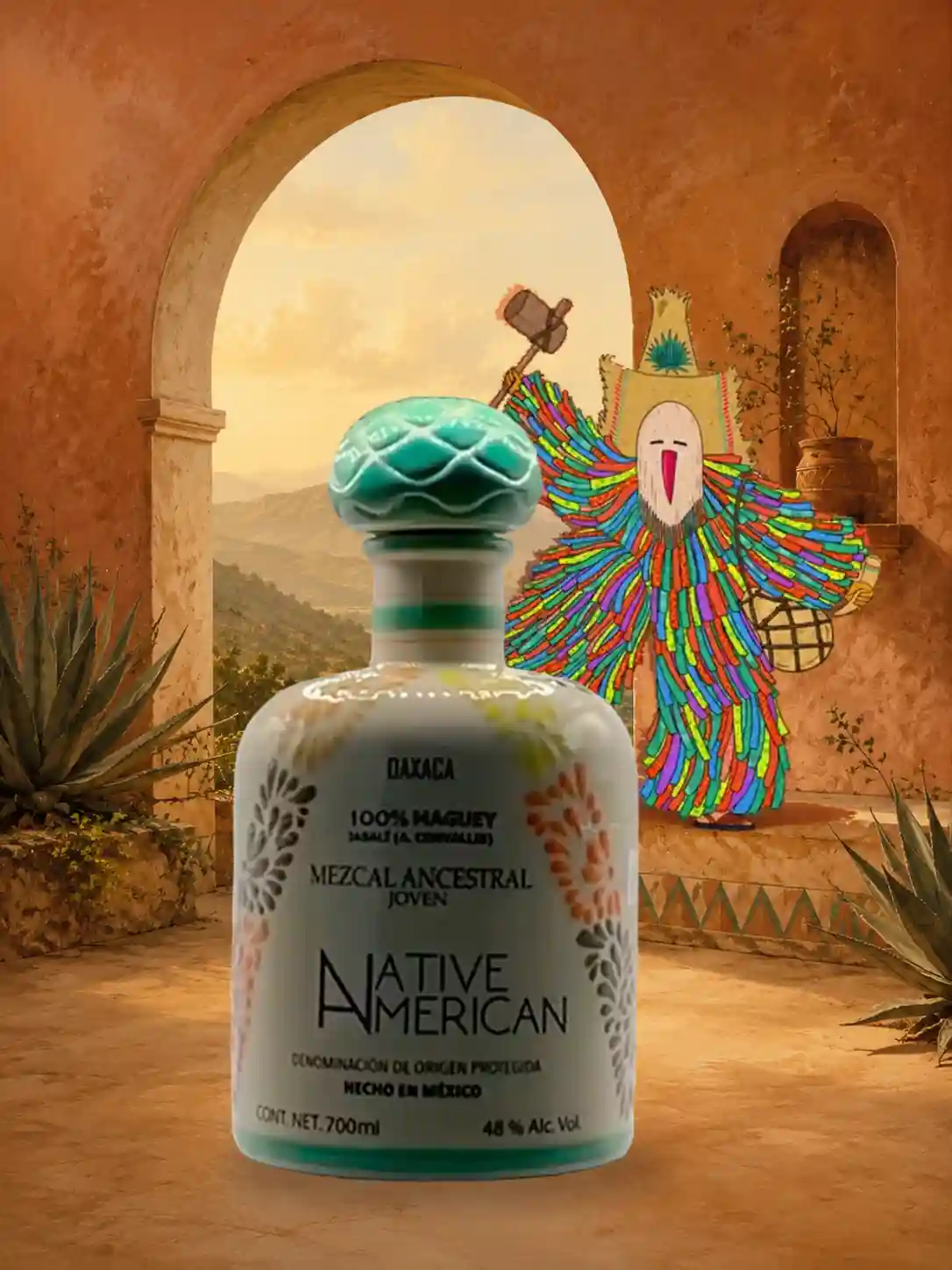
Blessed Remedy Spirits created Native American as a tribute to the Indigenous cultures, identities, and traditions that have shaped Mexico for generations.
Its first mezcal comes from San Juan Guelavia in Oaxaca, made from Jabalí through a process rooted in ancestral methods.
The agave is cooked in a conical pit oven, crushed with a wooden mallet in a canoe, fermented in pinewood vats, and distilled twice in clay pots.
Mexican artisans hand-make the bottle. Its cork is shaped as a reminder of the piña, the agave heart that provides mezcal's raw material.
Clay, water, air, and fire run through both the design and the production. Together, they connect the bottle to the materials and elements behind the mezcal.
Oaxacan identity
The Tiliche of Putla
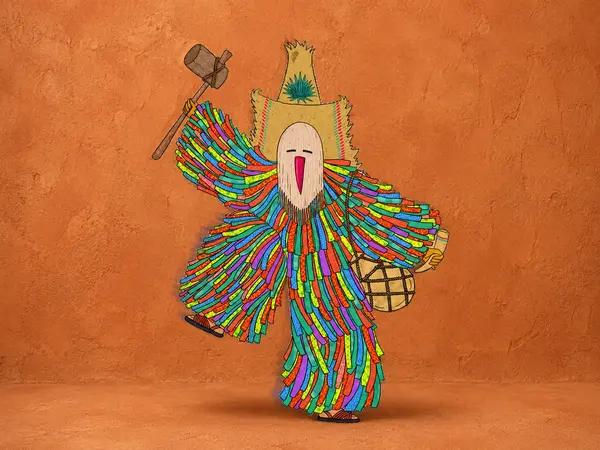
The Tiliche is one of Oaxaca’s most recognizable Carnival figures. Its costume is covered in brightly colored strips of fabric that move as the dancer moves.
It comes from Putla Villa de Guerrero, where the character grew from local Carnival traditions before becoming closely associated with Oaxaca’s Guelaguetza.
Earlier outfits used patches of worn clothing. Over time, those patches became the long fabric strips that give the Tiliche its unmistakable silhouette.
Native Americans use the Tiliche as their emblem, bringing movement, celebration, and a distinctly Oaxacan identity to the bottle.
How Mezcal Native American is Made
Native American mezcal follows an ancestral production method built around simple tools, natural materials, and work carried out by hand. Jabalí agave is cooked underground, crushed with wooden mallets, fermented with native yeasts, and distilled twice in clay pots.
01 · Harvest
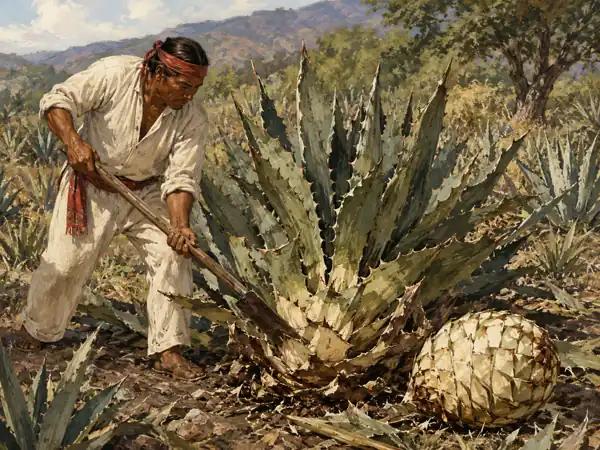
Harvesting Jabalí
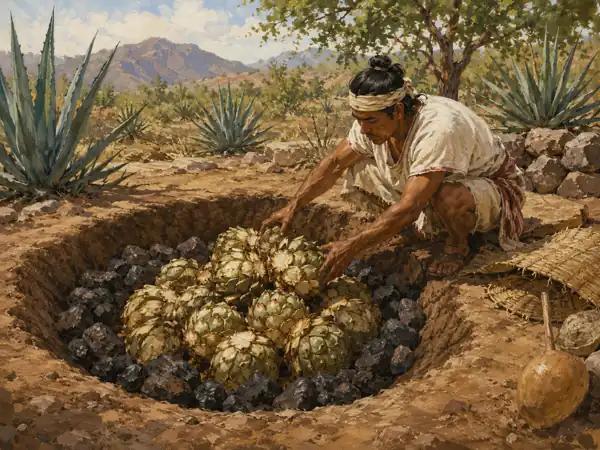
Mature Jabalí agaves are harvested and their leaves are removed to expose the piñas at the center of the plants.
02 · Cooking
Cooked underground
The harvested piñas are cooked in a traditional conical pit oven, where heat softens the agave and develops its cooked sweetness.
03 · Milling
Crushed with wooden mallets
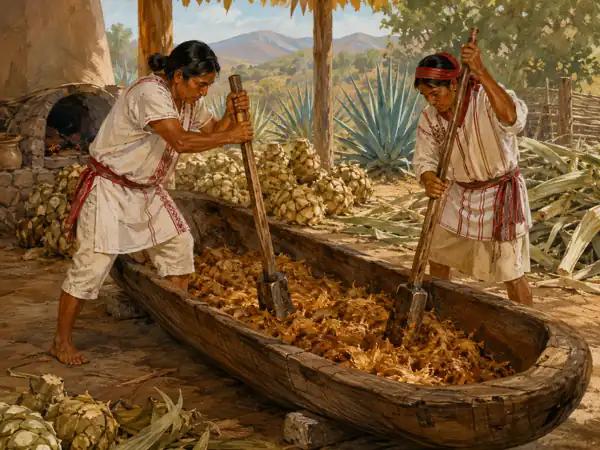
The cooked agave is placed inside a wooden canoe and crushed by hand with wooden mallets to break down the fibers and release the juices.
04 · Fermentation
Native yeast fermentation
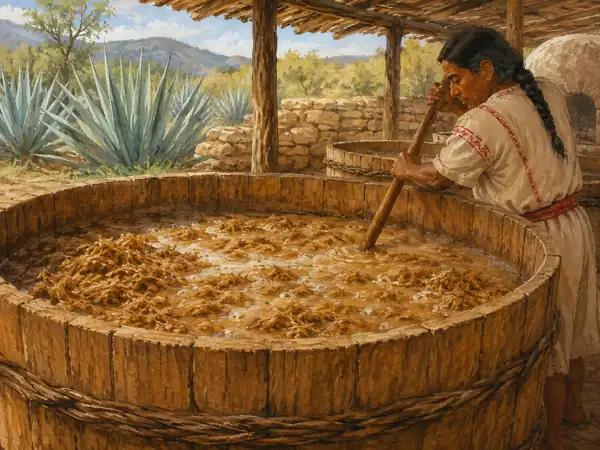
The crushed agave and its juices ferment with native yeasts in open pinewood vats, converting the natural sugars into alcohol.
05 · First distillation
Distilled in clay pots
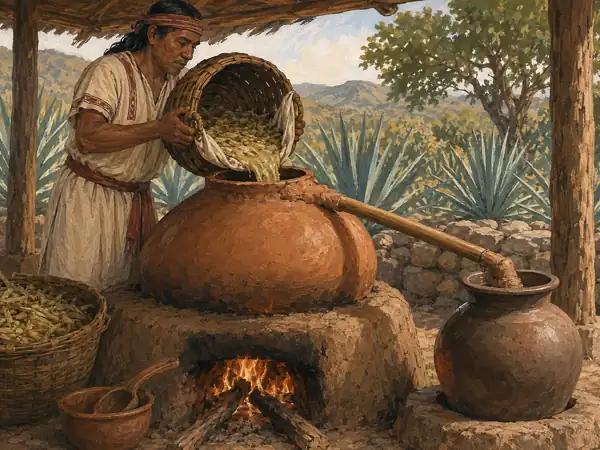
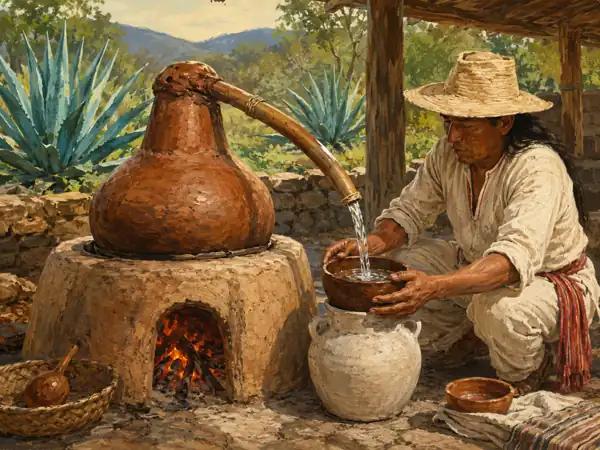
The fermented agave is transferred to traditional clay pots for the first distillation, separating the alcohol from the fermented material.
06 · Second distillation
Refined through a second run
A second clay-pot distillation refines the mezcal before the heart cut is used to bring the finished spirit to 48% ABV.