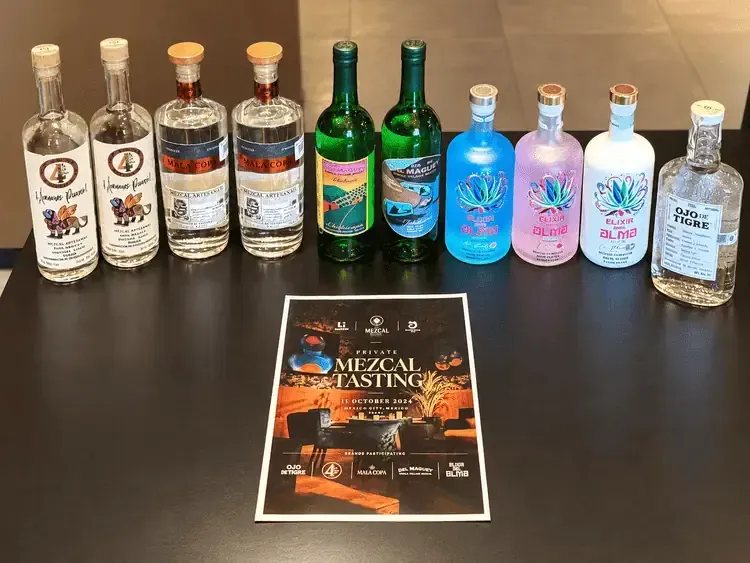
On 11 October 2026, The Mezcal Guide hosted its first event at Demon Duck, Banyan Tree Bluewaters Dubai. The private mezcal tasting brought together a selection of Mexican mezcal brands, cocktails and food pairings prepared by the Demon Duck team.
Throughout the afternoon, guests explored different agave varieties, production methods and flavor profiles through guided tastings and carefully selected pairings. The goal was to show mezcal's diversity, from traditional expressions to more unusual styles, while giving Mexican producers a chance to reach an international audience in Dubai.
Ojo de Tigre Welcomes the Guests
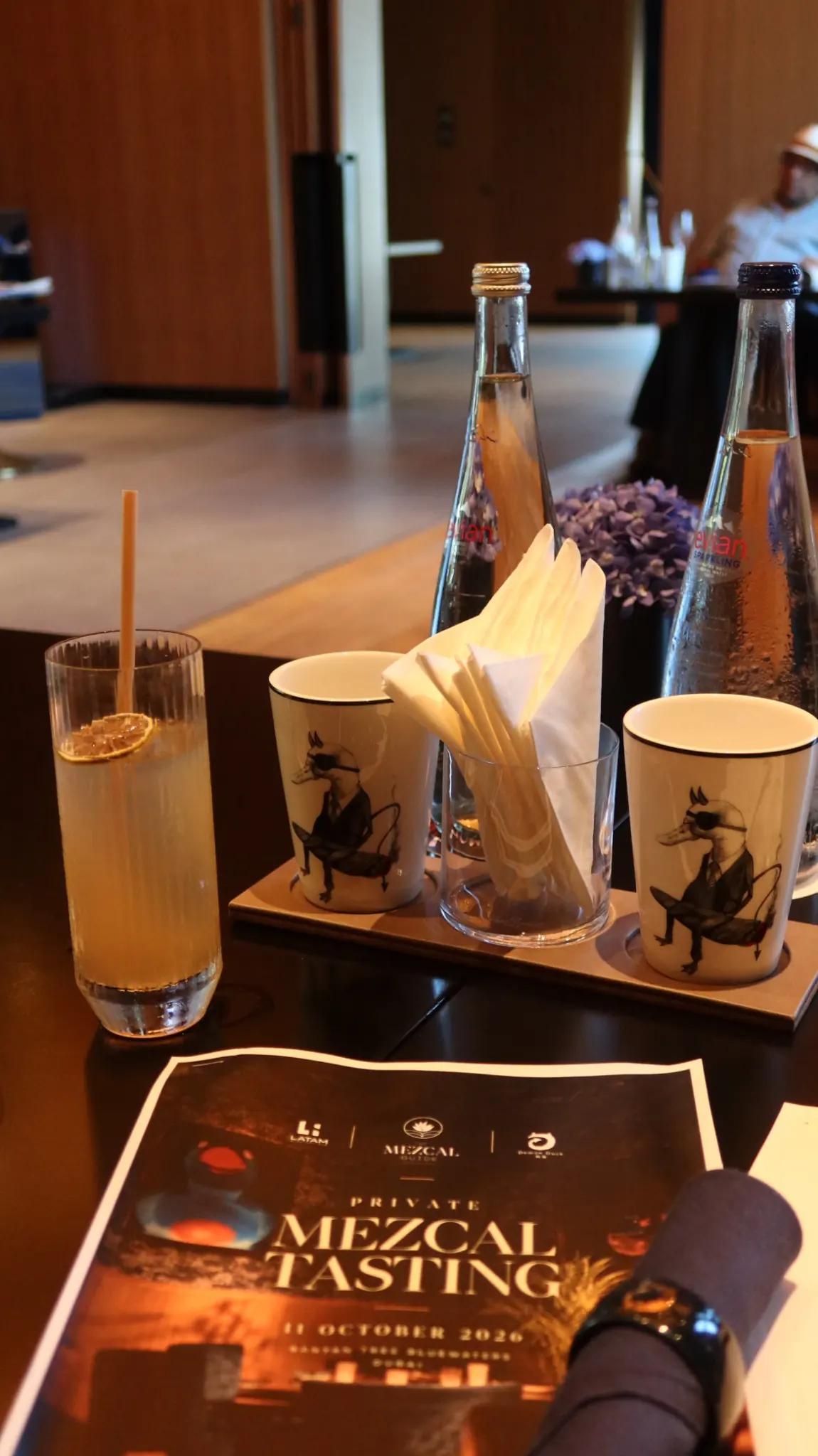
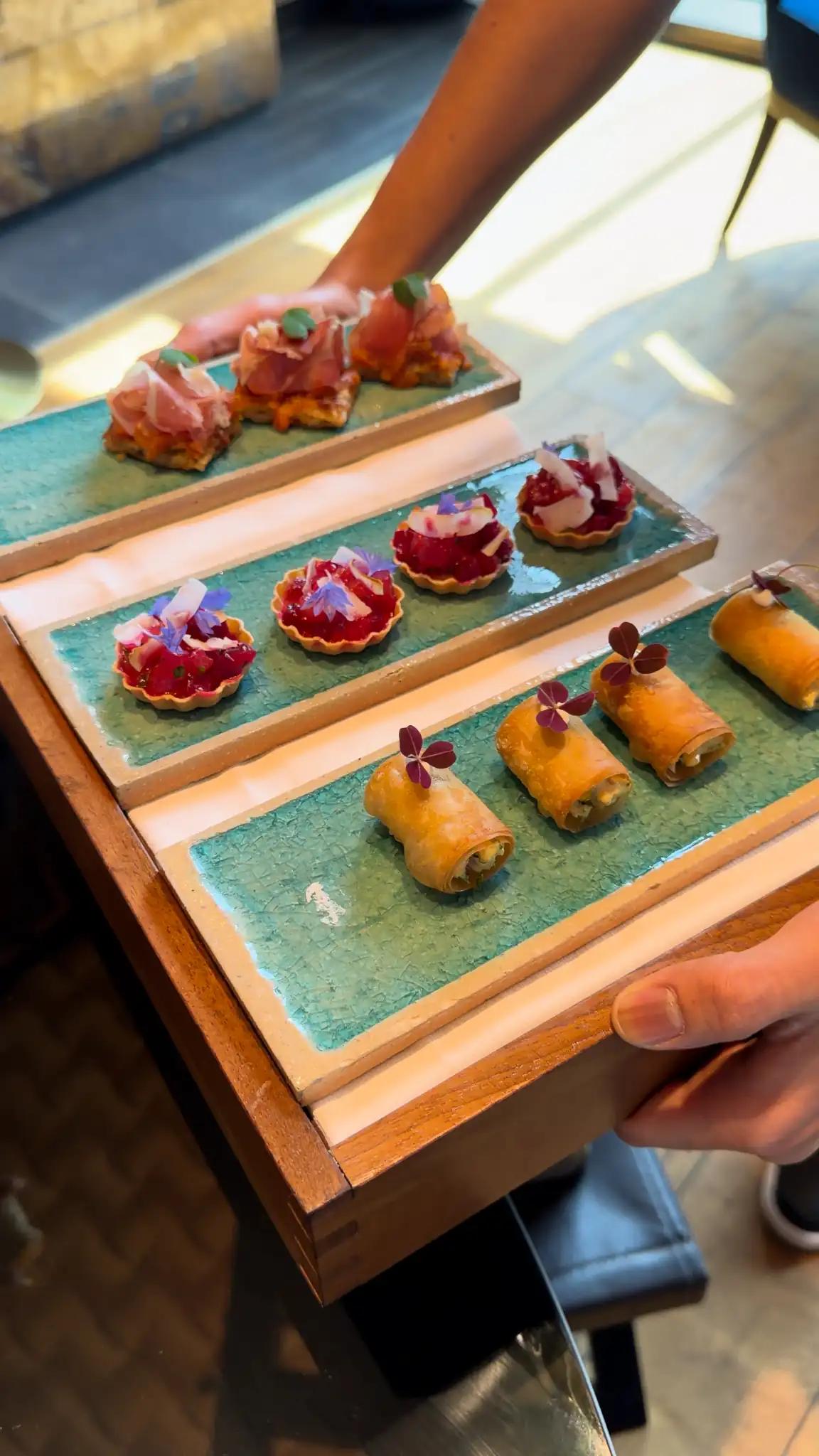
The afternoon began with Ojo de Tigre's signature cocktail, the Pink Tiger, served as guests arrived at Demon Duck. Ojo de Tigre sponsored the welcome experience, featuring their Joven mezcal, an ensamble of Espadín from Oaxaca and Tobalá from Puebla, mixed with fresh lime and pink grapefruit soda.
Alongside the cocktails, Demon Duck served a selection of canapés, including corn-fed chicken and kale, pineapple and heirloom beetroot tartlets, and pan con tomate with beef pancetta.
The relaxed start gave guests time to mingle before the guided mezcal tasting began.
The First Tasting: 4 by Casa Masha
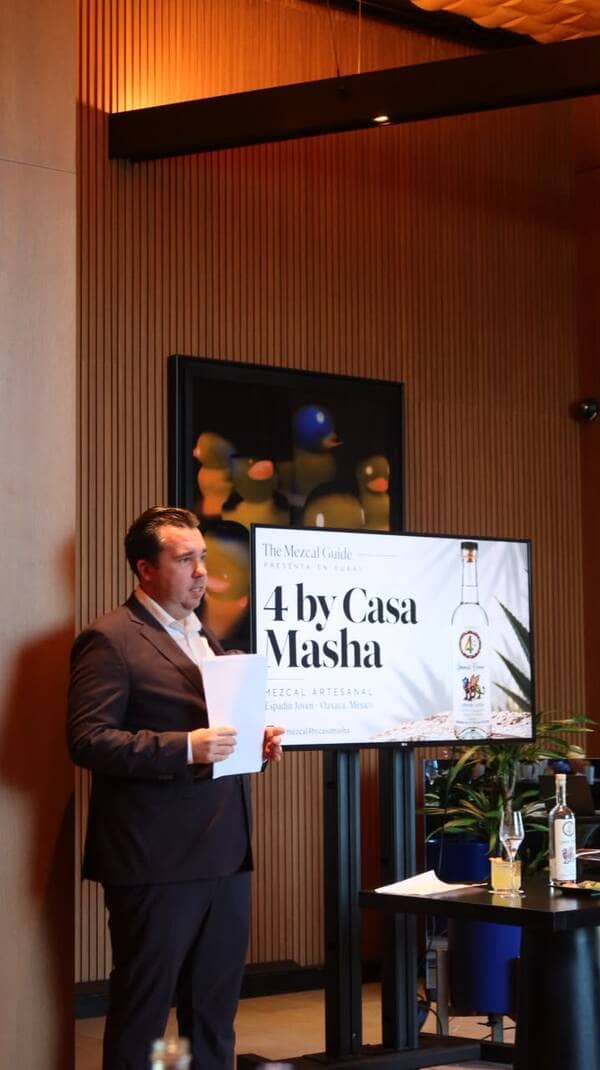
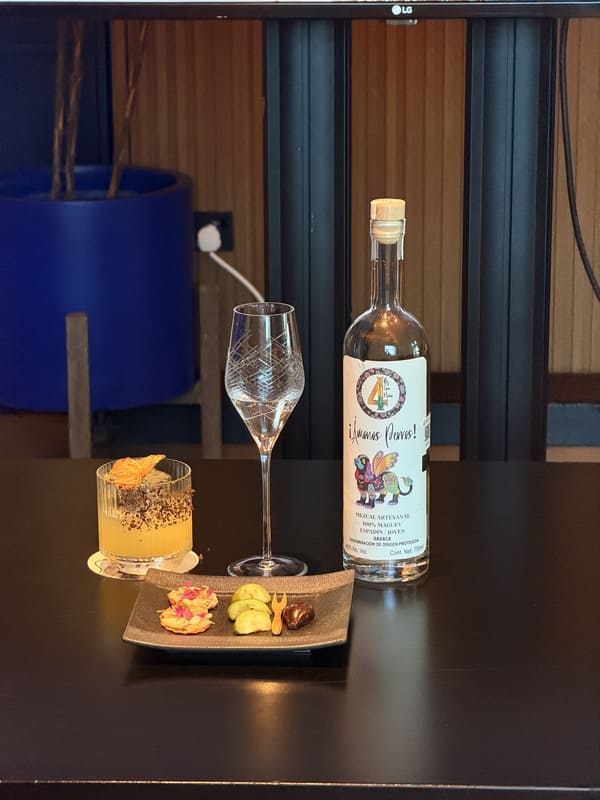
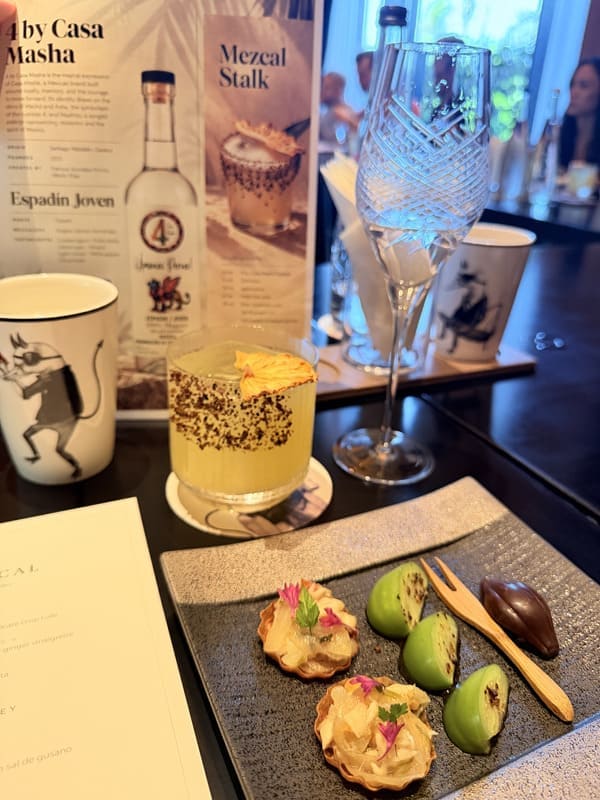
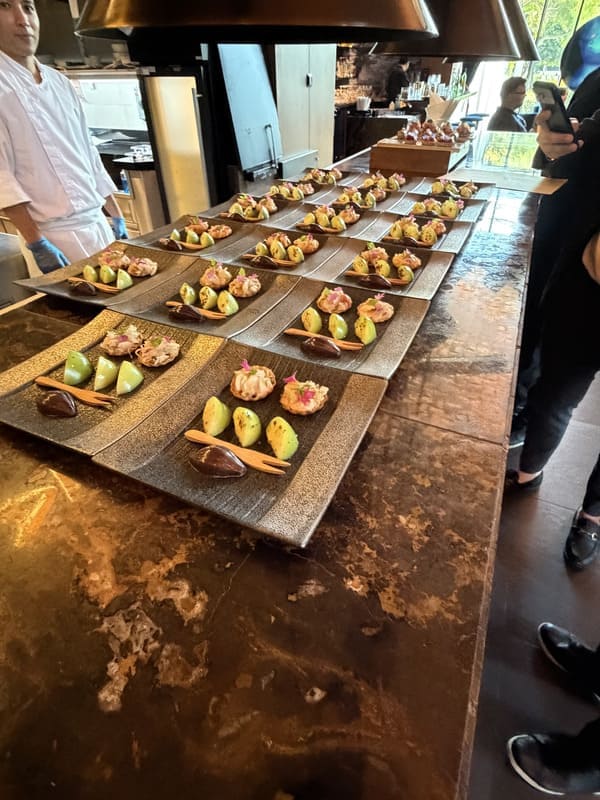
Once everyone was seated, the guided tasting began with 4 by Casa Masha Espadín Joven, produced in Santiago Matatlán, Oaxaca, a town often referred to as the world's mezcal capital.
Espadín is the most widely used agave in mezcal production, making it a natural starting point. Guests were introduced to the traditional production process, from cooking the agave in underground ovens to crushing it with a stone tahona, natural fermentation, and copper distillation.
The Demon Duck kitchen served the mezcal neat in champagne flutes, accompanied by a tasting plate. The plate included ceviche crackers, fresh tomatillo with sal de gusano, and a piece of dark chocolate. Each pairing offered a different way to experience the mezcal, from the tomatillo's acidity to the chocolate's bitterness.
The presentation finished with Casa Masha's signature Mezcal Stalk, a cocktail combining Espadín with pineapple, fresh lime, Cointreau, and agave syrup, served with a sal de gusano rim and dehydrated pineapple garnish.
Mala Copa: A Different Side of Espadín
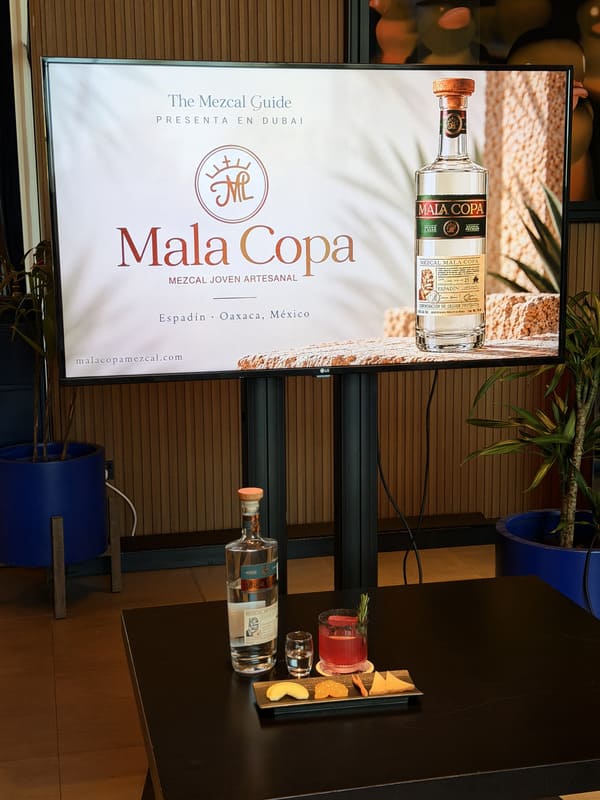
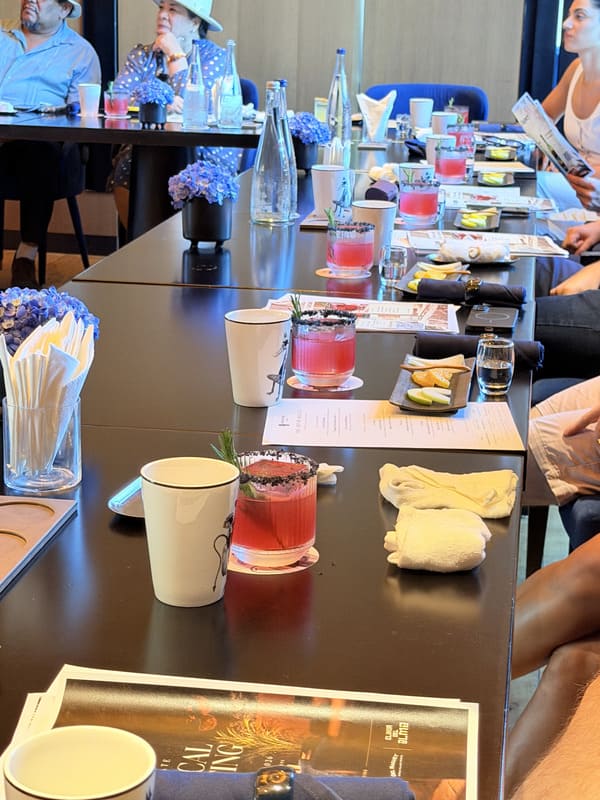
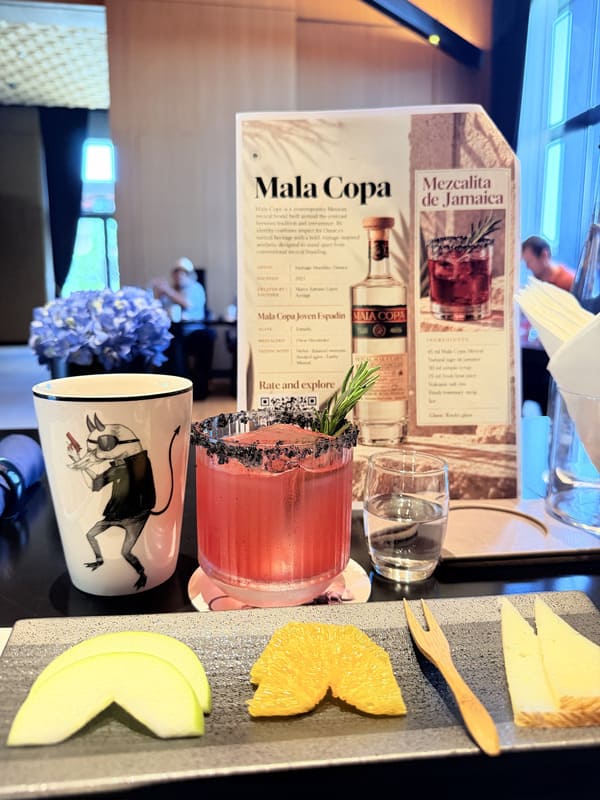
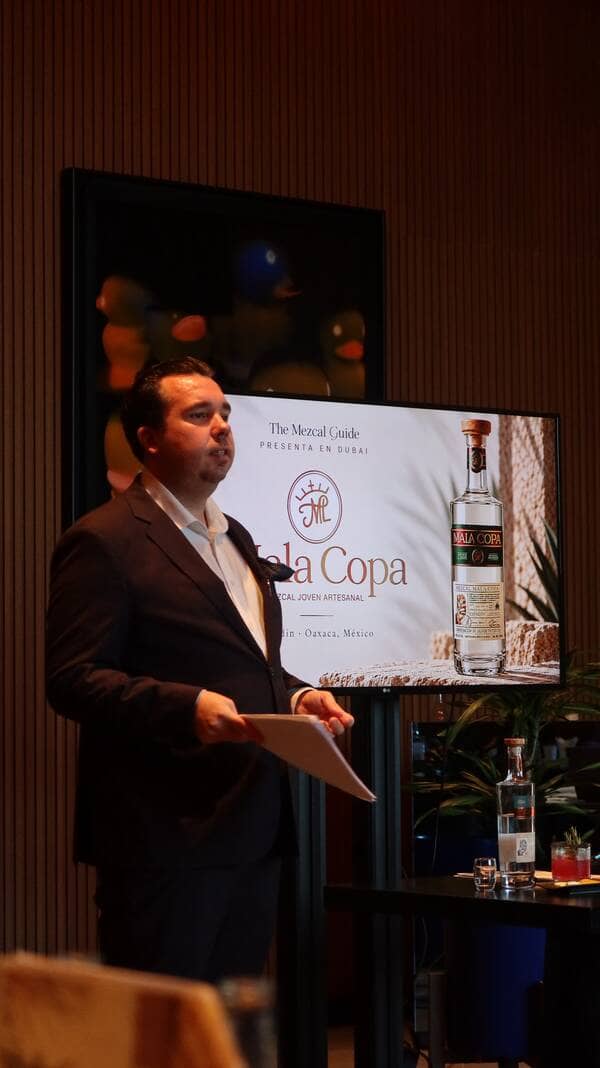
Next was Mala Copa Espadín Joven, also produced in Santiago Matatlán, Oaxaca. Although both Mala Copa and Casa Masha use the same agave and similar traditional production methods, the flavor difference was clear. Guests particularly enjoyed Mala Copa's stronger smoky character.
The mezcal was served neat in shot glasses, paired with green apple, fresh orange, and aged Manchego cheese. Each pairing offered a different contrast to the mezcal's earthy, smoky notes, from the apple's acidity to the orange's sweetness and the cheese's richness.
The presentation finished with Mala Copa's Mezcalita de Jamaica, made with freshly prepared hibiscus juice, lime, and simple syrup, served with a volcanic salt rim and fresh rosemary. The cocktail brought out a different side of the mezcal, pairing its smokiness with hibiscus's tart, floral notes.
The Third Tasting: Del Maguey
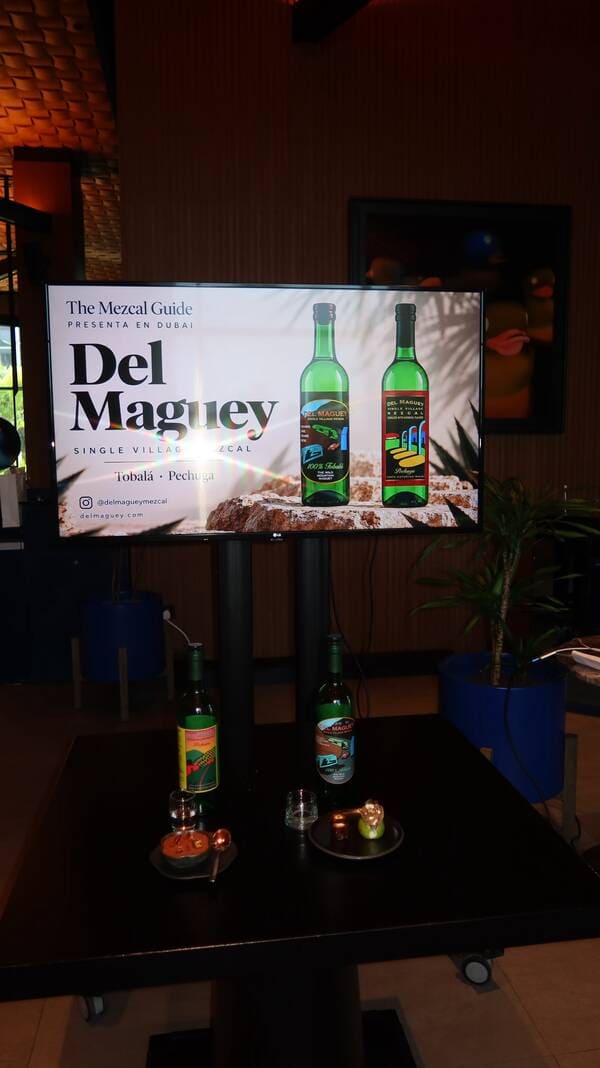
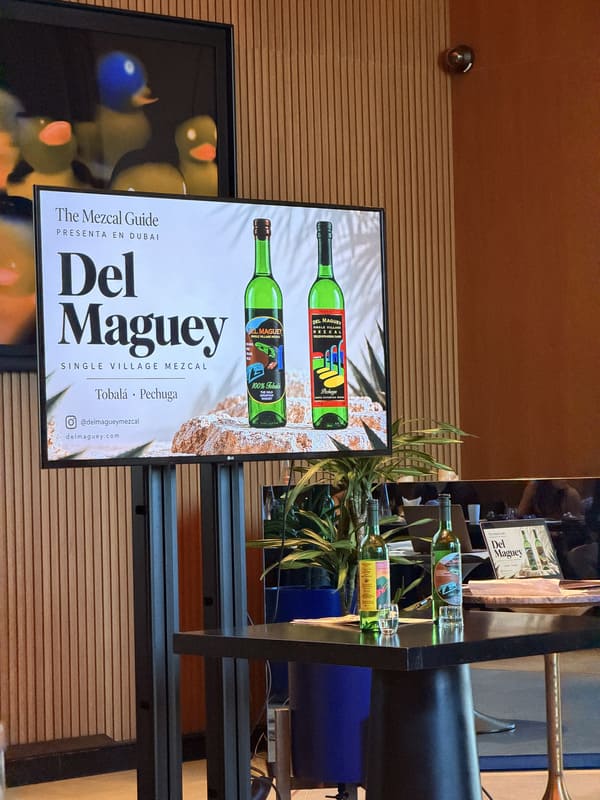
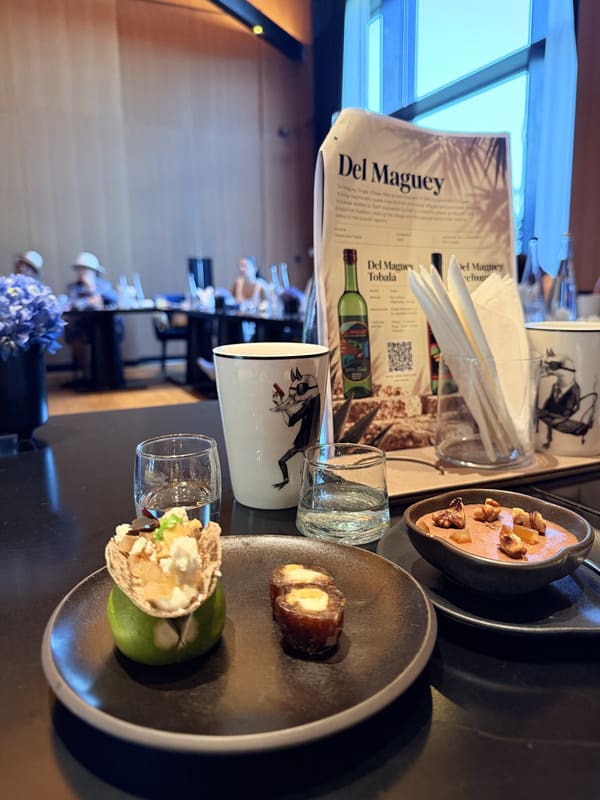
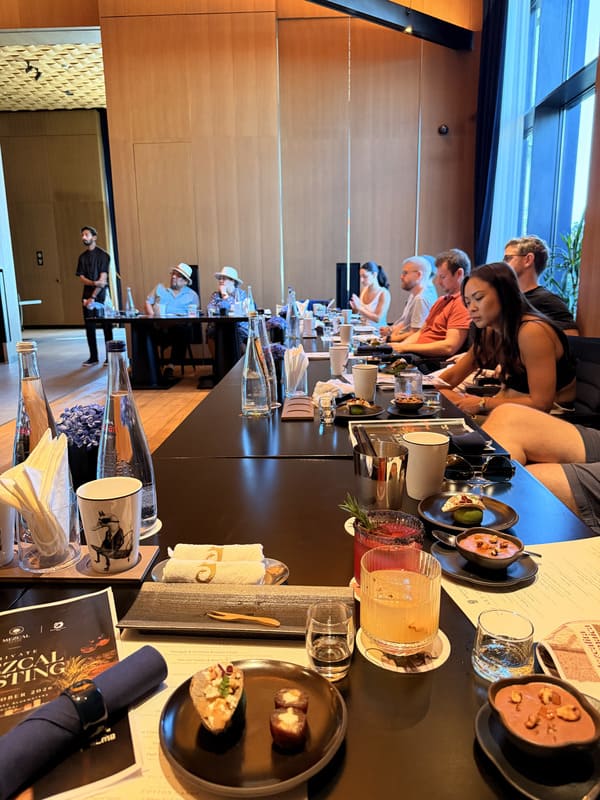
After Mala Copa, the tasting moved on to Del Maguey, the pioneering brand best known for its Single Village Mezcals. For this part of the afternoon, guests were introduced to two very different expressions: Del Maguey Tobalá and Del Maguey Pechuga.
While Del Maguey draws on several village traditions, both mezcals presented in Dubai came from Oaxaca. Tobalá offered a more lifted, complex style, while Pechuga introduced guests to one of mezcal's most traditional special expressions, made through a third distillation with fruit and chicken breast.
Demon Duck paired the tasting with a small plate of savory and sweet bites, including a creamy bite served in lime, a stuffed date, and roasted nuts. Together, the pairings highlighted the contrast between the two expressions and gave guests a broader sense of mezcal's range.
Elixir del Alma: Exploring Cupreata from Michoacán
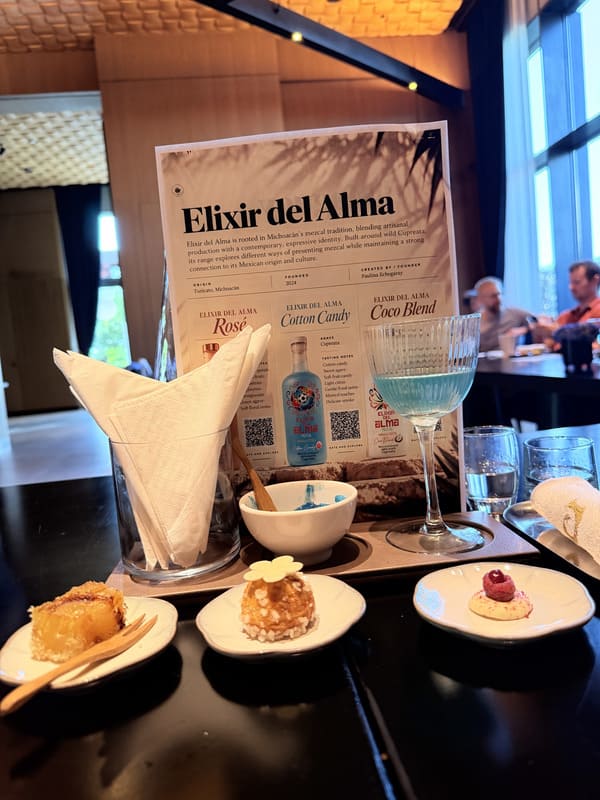
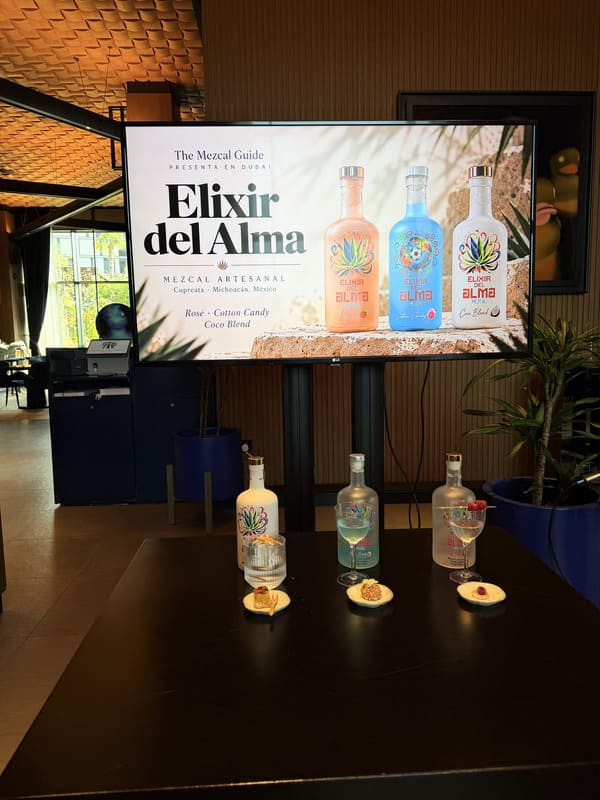
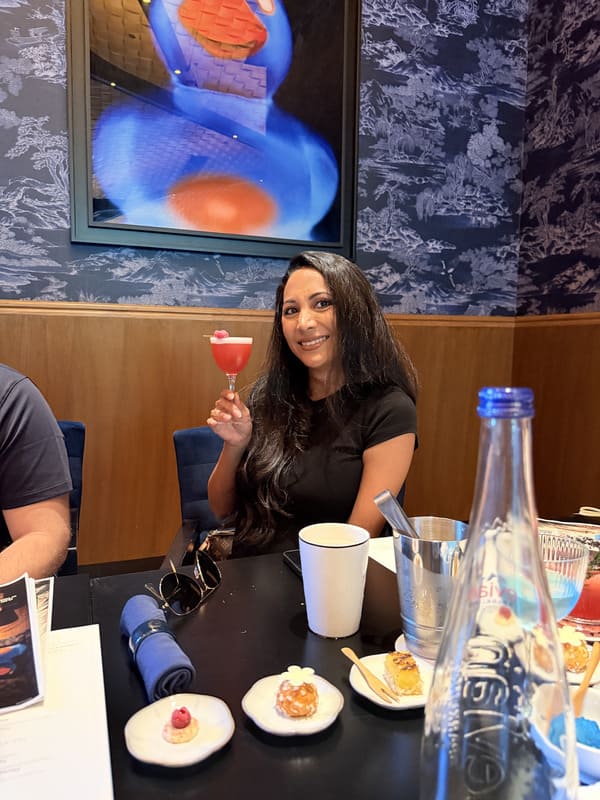
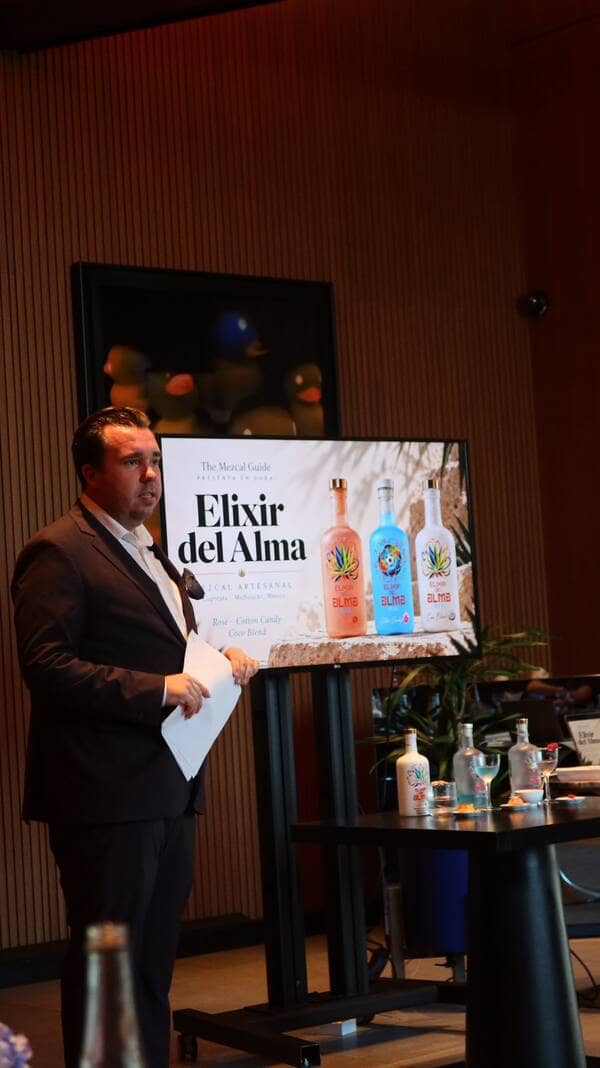
The final part of the guided tasting took us from Oaxaca to Turicato, Michoacán, with Elixir del Alma. Guests were introduced to Cupreata, a different agave species from the Espadín and Tobalá tasted earlier, through three expressions: Coco Blend, Rosé and Cotton Candy.
We started with Coco Blend, served lightly chilled over a large ice cube with toasted coconut. Demon Duck paired it with grilled pineapple, complementing the mezcal's tropical, coconut flavors.
Next was Rosé, a floral, fruit-forward expression served in a coupe glass with fresh raspberries and paired with white chocolate. The combination brought out the mezcal's red-fruit notes while offering a softer, sweeter contrast to the earlier tastings.
The afternoon's final guided pour was Cotton Candy, served well chilled with a generous piece of blue cotton candy over the glass. Paired with a vanilla dessert from Demon Duck, it provided a playful finish to the tasting. It showed guests a very different side of what can be created with Cupreata.
La Cura Mezcal & Cházaro Cigars
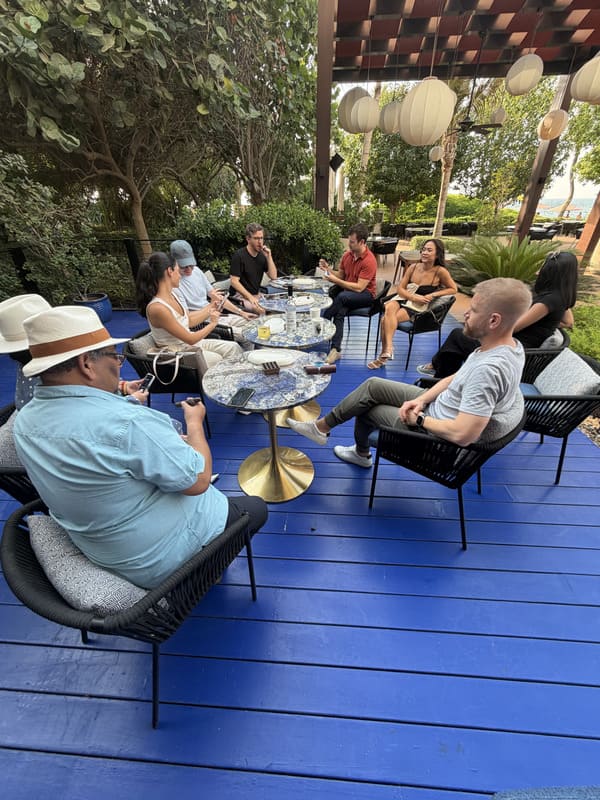
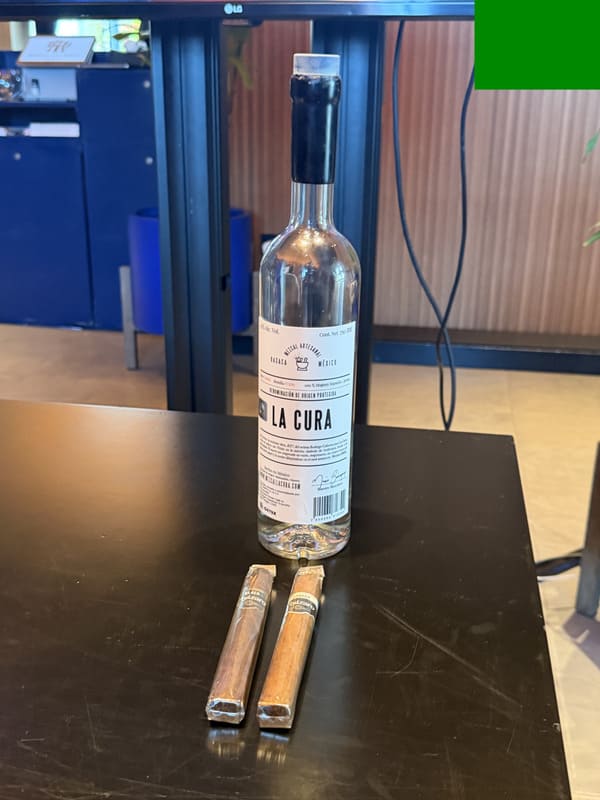
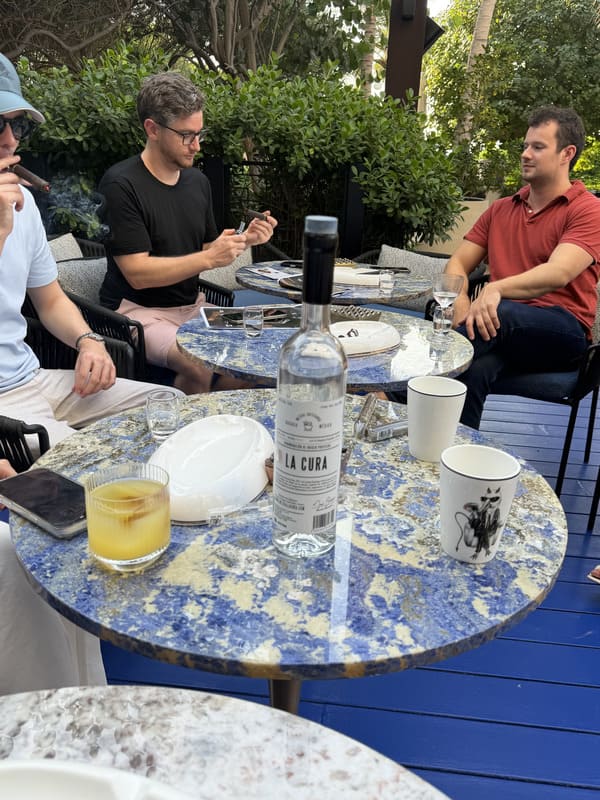
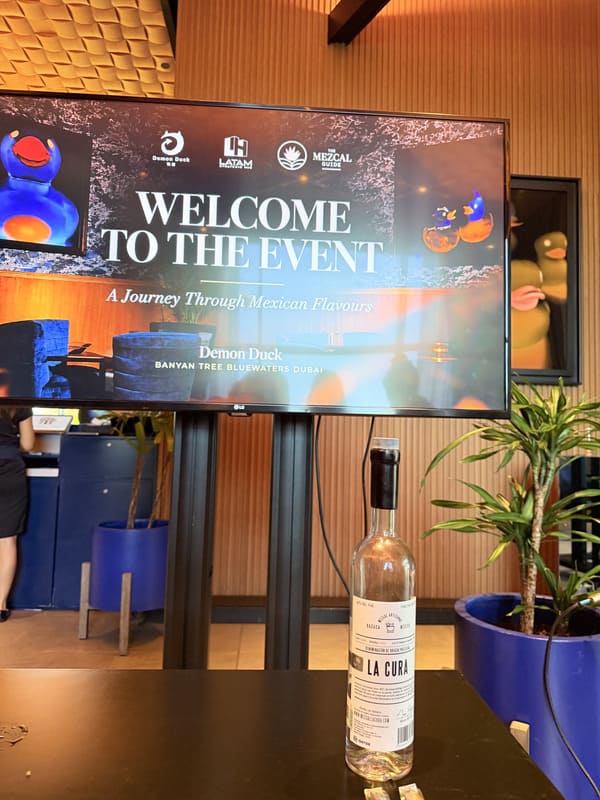
For a different kind of dessert, we had arranged something special with Cházaro, pairing Mexican cigars with La Cura Mezcal, an artisanal Espadín from Oaxaca.
After the guided tasting, guests headed outside to enjoy the cigars and mezcal in a more relaxed setting. It was a great way to end the afternoon, with good conversations, Mexican cigars, and one final taste of mezcal.